2026-04-05 · Blog
What does an in-house designer cost? The hidden costs nobody counts
Details
An in-house designer isn't just a salary. Add recruitment, onboarding, employer contributions, software and the risk of burnout. Here's what a creative headcount really costs and when it stops paying off.

An in-house designer. What does it really cost, before you even start counting?
The company needs a designer. Someone on the board says: “let's hire someone in-house, it'll be cheaper than an agency.” Someone works out the salary — say 10,000 PLN gross — and the matter is closed.
But that isn't the full figure. It's the first line of a spreadsheet most companies never finish filling in.
In this piece I take the real cost of an in-house designer apart — not to talk you out of the decision, but so you make it with your eyes open.
What everyone counts — and why it isn't enough
A senior designer or art director in Poland now earns 12,000–20,000 PLN gross a month. On top of that come employer costs — social security adds another 20% to what employing them actually costs. At 12,000 PLN gross the company really pays around 14,400 PLN a month.
That still isn't the full figure. Because before the salary comes recruitment. And after recruitment comes onboarding.
A headhunter's fee for a senior creative at this level is worth one or two months of the candidate's salary — 12,000–24,000 PLN one-off. Finding the right person takes three to six months. Then come software licences: Adobe Creative Cloud, Figma, AI tools — another 500–600 PLN a month, over 6,000 PLN a year. Training in the first year: 5,000 PLN is the minimum. HR and manager time spent on recruitment and onboarding: another 10,000 PLN over the year.
Add it all up:
And that assumes the hire works out first time. That the person doesn't leave after a year. And that you find someone with the skills at all.
The problem that starts before you even post the job
There's one more dimension to this calculation that's rarely discussed — and that in practice is a frequent source of frustration.
By recruiting a designer in-house, companies automatically narrow the pool to people in one geographic area. A hybrid or on-site arrangement — which employers often insist on — means looking for someone within commuting distance of the office. In smaller cities, or in niche specialisms (CGI, motion design, 3D), that pool is very thin. You can search for months and find nobody who combines the quality you need with availability.
The company then either lowers its bar and hires someone who sort of can do it — or waits half a year for the ideal candidate while production stands still.
What companies expect from one person — and why it doesn't work
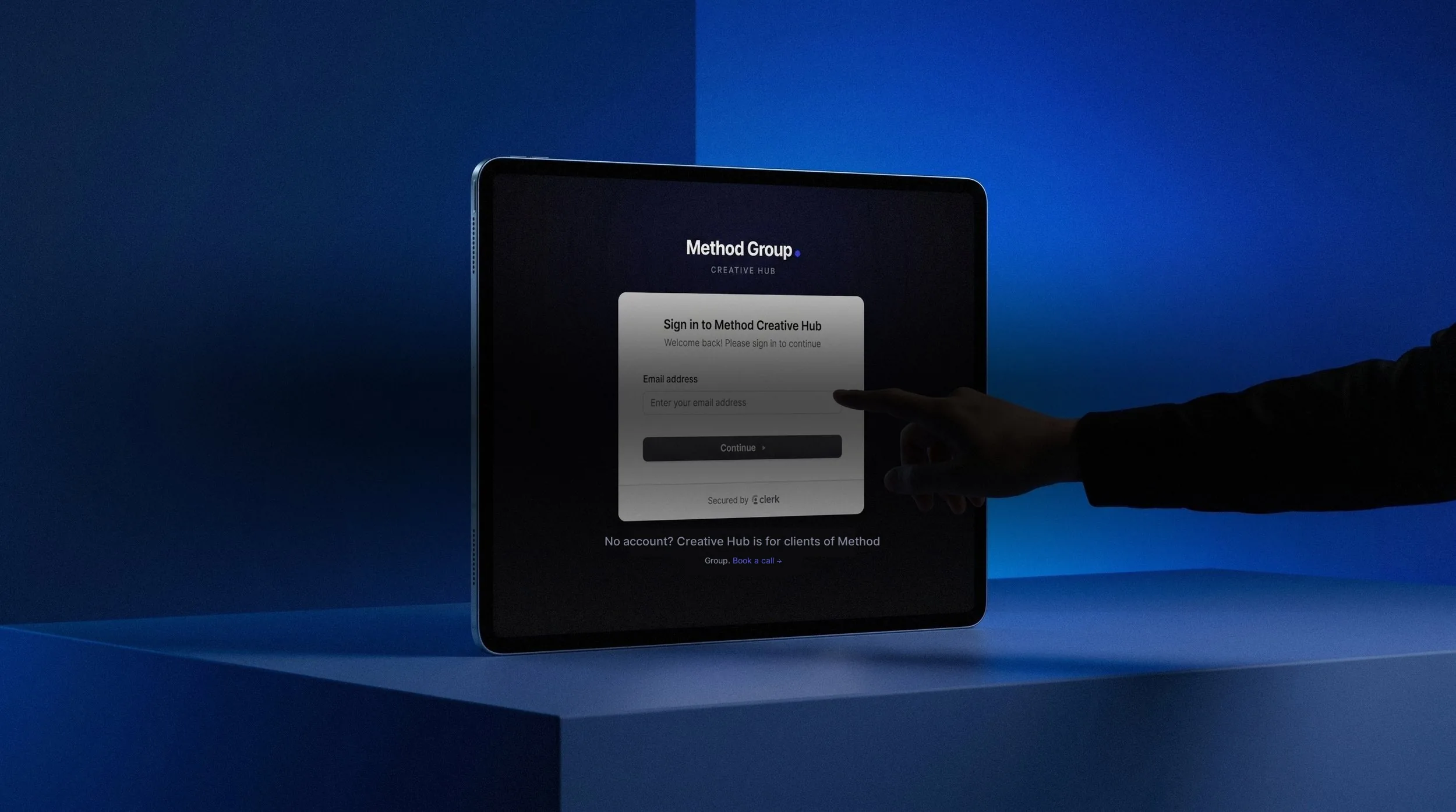
Your projects in one place
See how it works: Method Creative Hub
This is where the most serious problem starts. And it's a structural problem, not a personal one.
Owners and managers without deep experience of creative production often see a designer as someone who does everything. The person hired is meant to handle branding, rebranding, the website, social media, sales materials, presentations, ad campaigns, video and animation — ideally all at once.
Just as you wouldn't expect one agent in a sales office to also be a mortgage adviser, a valuer and a contract lawyer, there is no designer who is simultaneously an expert in CGI, motion design, UX/UI and brand design. Each of those is a career path measured in years. One person cannot be senior in all of them at once.
When a company doesn't see this and hires one person expecting the full range, the result is either low-quality output across the board, or that person burning out, or both at once.
Burnout — the cost that never shows up in the spreadsheet
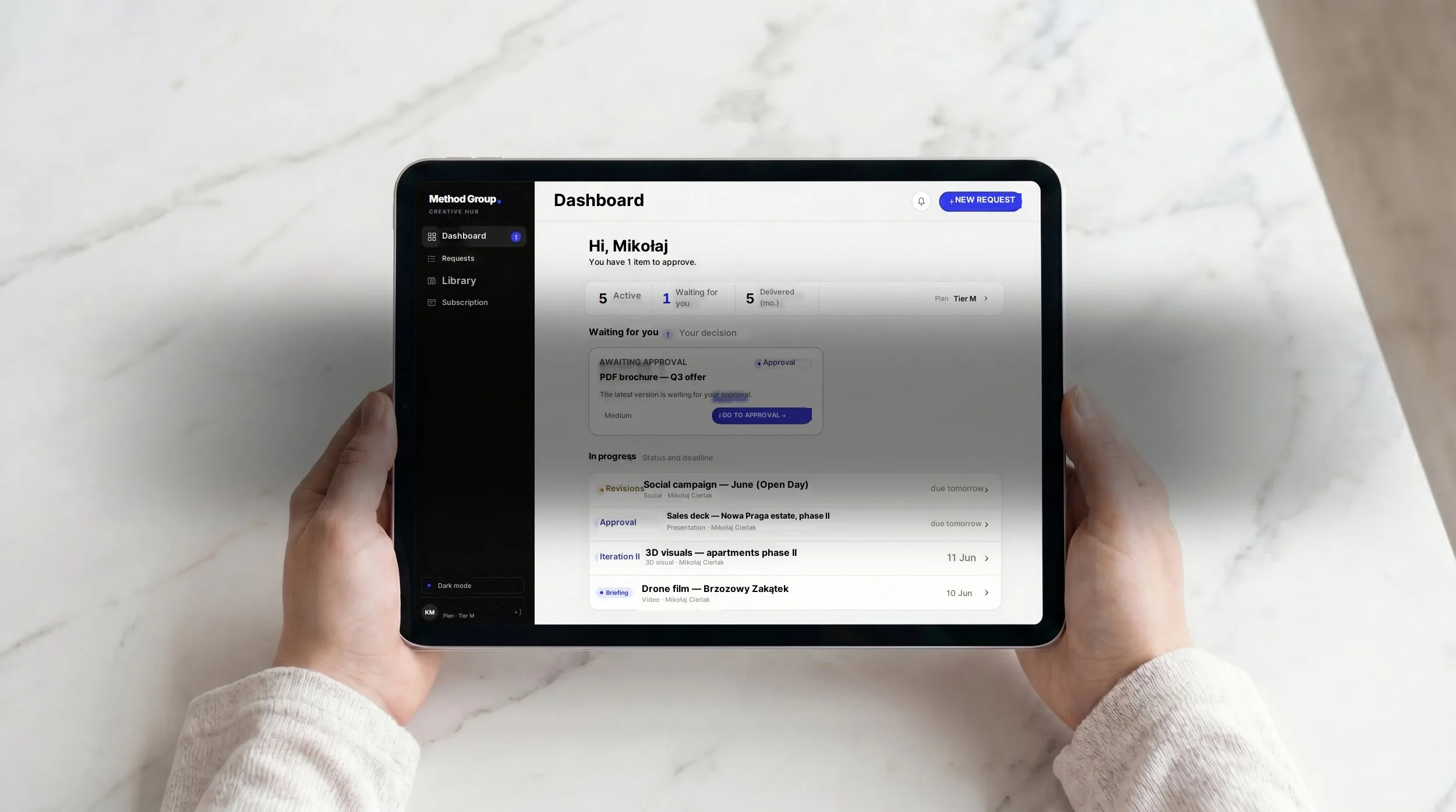
24/7 access for you and your team
See how it works: Method Creative Hub
This is the part few people discuss openly when talking about the cost of employment.
According to a report by UCE Research and the platform ePsycholodzy.pl from 2024, 78.3% of working Poles show at least one symptom of burnout — up 13 percentage points in just three years. A Mercer report from the same year puts 82% of employees at risk of burnout, with 40% experiencing chronic exhaustion.
Creatives are especially exposed. Constant deadline pressure, being expected to be someone who does everything, no peers with comparable skills around them — these are textbook conditions for burnout.
What does burnout cost the company? Productivity falling before the person even hands in their notice. Sick leave, which the company pays for. Mistakes and weaker work in their final months. And the whole recruitment again.
One of our clients — a company in the education sector — learned this painfully. Keeping a whole creative team outgrew the budget and they let seven of nine people go. The remaining two were left with all the production. The outcome was inevitable: burnout, sick leave, more departures. For several months the company couldn't produce material at all.
This is a real scenario, and it repeats more often than people think.
When an in-house designer does make sense — the honest answer
Hiring in-house is justified in specific circumstances. When the company has a very high, predictable and uniform volume of work in one specialism. When the brand is big enough to need a permanent person managing visual consistency, and can afford a whole creative department rather than one individual. When the culture requires the maker to be deeply immersed in the company's day-to-day.
But for most companies — particularly those growing, with varied creative needs and a limited HR budget — a creative headcount is a solution that looks cheaper than it is and delivers less than it promises.
What the alternative is

A dedicated team from day one
See how it works: Method Creative Hub
The Creative-as-a-Service model — access to a full team of creative specialists on a single subscription — isn't a new agency or another freelancer. It's an operating system for creative production that removes every problem described in this article.
No recruitment. No onboarding. No risk of one person carrying the whole range and burning out. No geographic limit on who you can work with. With the full range of skills, from CGI through motion design to UI/UX, available from day one.
Method Creative Hub starts at 10,000 PLN a month on Tier-S. Compare that with 20,000 PLN a month of effective headcount cost — for a fraction of the range and all of the recruitment risk.
The maths is simple. The decision less so — because it means admitting that the model that seems natural may not be the one that actually works.
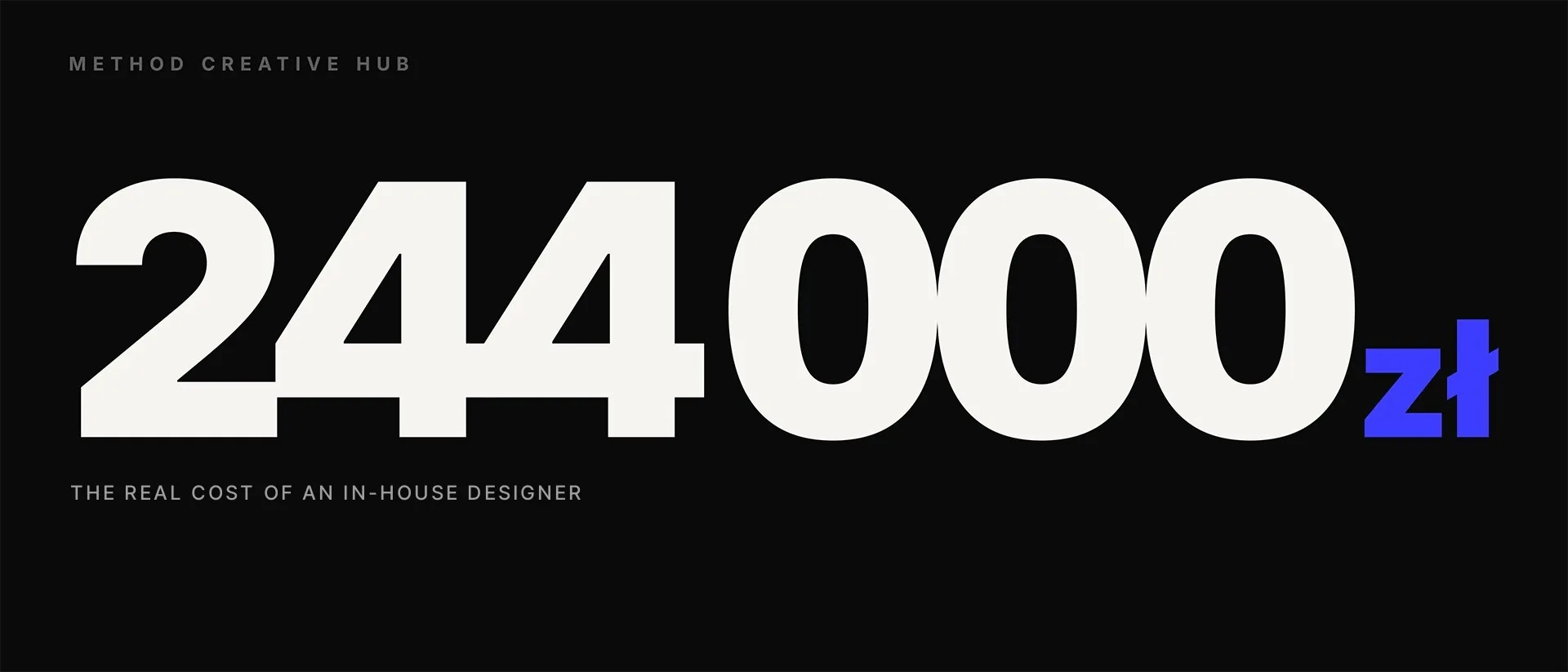
More than the salary you type into the spreadsheet. The real first-year cost is around 244,000 PLN — counting gross pay with employer contributions, a headhunter's fee, Adobe and Figma licences, training and the HR time spent on onboarding. Effectively that's about 20,000 PLN a month. And that assumes the hire works out first time and the person doesn't leave after a year.
At 12,000 PLN gross the company really pays around 14,400 PLN a month — employer social security adds another 20%. Over a year that's 173,000 PLN of gross pay alone plus 35,000 PLN of contributions. But before the first payslip the company pays 12,000–24,000 PLN to a headhunter and waits three to six months for the right person.
An in-house designer costs effectively around 20,000 PLN a month once every cost is counted — and delivers the range of one specialism. Method Creative Hub on the Growth plan starts at 10,000 PLN a month and gives access to the full range: CGI, motion design, UI/UX, branding, video, AI. No recruitment, no onboarding, no risk of one person carrying everything and burning out. The maths is simple — the decision only requires admitting that the natural model may not be the best one.
When the company expects one person to cover a range that needs several specialisms at once. An in-house designer makes sense when the volume is high, predictable and uniform within one field. It stops paying off when the company grows and needs CGI, motion design, branding and e-commerce material at the same time — because one person cannot be senior in all of those paths at once. The result is either low quality everywhere, or burnout, or both.
The salary is only the first line of a spreadsheet most companies never finish. The hidden costs include: a headhunter's fee of 12,000–24,000 PLN one-off, Adobe and Figma licences at over 6,000 PLN a year, at least 5,000 PLN of training in the first year, and another 10,000 PLN of manager and HR time on recruitment and onboarding. Then there's the cost of burnout — falling productivity, sick leave and the whole recruitment again — which nobody budgets for in advance.
No — and it's a structural problem, not a question of one person's ability. Just as there's no developer who writes Python backends and Unreal Engine games with equal fluency, there's no designer who is senior in CGI, motion design, UX/UI and brand design at the same time. Each is a career path measured in years. A company that hires one person expecting the full range gets either low quality everywhere, or burnout, or both.
It depends on scale and predictability. In-house wins when the company has a high, uniform volume in one specialism and a culture that needs the maker immersed in the brand's day-to-day. An agency or CaaS wins when needs are varied, the company is growing and changing what it produces faster than one headcount can follow. For most growing companies, a creative headcount looks cheaper than it is and delivers less than it promises.
Three to six months is realistic — particularly in niche specialisms such as CGI, motion design or 3D. Recruiting in-house narrows the pool to one geographic area. In smaller cities that pool is very thin: you can search for months and find nobody who combines the quality you need with availability. The company then either lowers its bar and hires someone who sort of can, or waits half a year while production stands still.
The Creative-as-a-Service model — access to a full team of creative specialists on a single subscription. Not an agency, not a freelancer, not another hire. A system that removes every problem of a creative headcount: no three to six months of searching, no geographic limits, no risk of one person carrying the whole range and burning out, with the full range of skills from day one. Method Creative Hub starts at 10,000 PLN a month — against an effective headcount cost of 20,000 PLN a month, the difference is clear.
Burnout never appears in the budget in advance — but it appears in the results. According to a 2024 UCE Research report, 78.3% of working Poles show at least one symptom of burnout. Creatives are especially exposed: deadline pressure and being expected to do everything are textbook conditions.
For the company it means a specific sequence of costs: productivity falling before the person resigns, sick leave the company funds, mistakes in the final months of employment, and finally the whole recruitment again — 12,000–24,000 PLN and another three to six months of searching. One Method client in the education sector let seven of nine people in its creative team go when costs outgrew the budget. For several months the company couldn't produce material at all.