2026-06-14 · Blog
The founder as the bottleneck — when you are the problem
Details
They answer fast, they remember what was agreed, they tie up loose ends after everyone else. Early on that's the founder's advantage. Later the company runs on their availability. Here's when a founder becomes the bottleneck in their own business.

The founder as the bottleneck in their own company
A company dependent on the founder's availability isn't badly organised. It's what happens without a system to take over repeatable decisions, statuses and operational knowledge. The fix doesn't start with delegating; it starts with systematising.
The worst bottleneck in a company often looks like a good founder. Answers quickly. Remembers what was agreed. Ties up loose ends after other people. Knows which material is current. Knows what to say to the client. Knows who needs a nudge.
Early on that's an advantage. Later the company starts running on their availability. At that point you no longer merely have a problem with the founder's time. You have a problem that the work has no system of its own.
A company doesn't grow on the founder's energy alone
McKinsey has a good name for the point where many companies stall: the move from founder-led growth to industrialised scalability.
In plain terms: what worked while the founder kept everything close stops being enough once the company has more clients, more people and more work running in parallel.
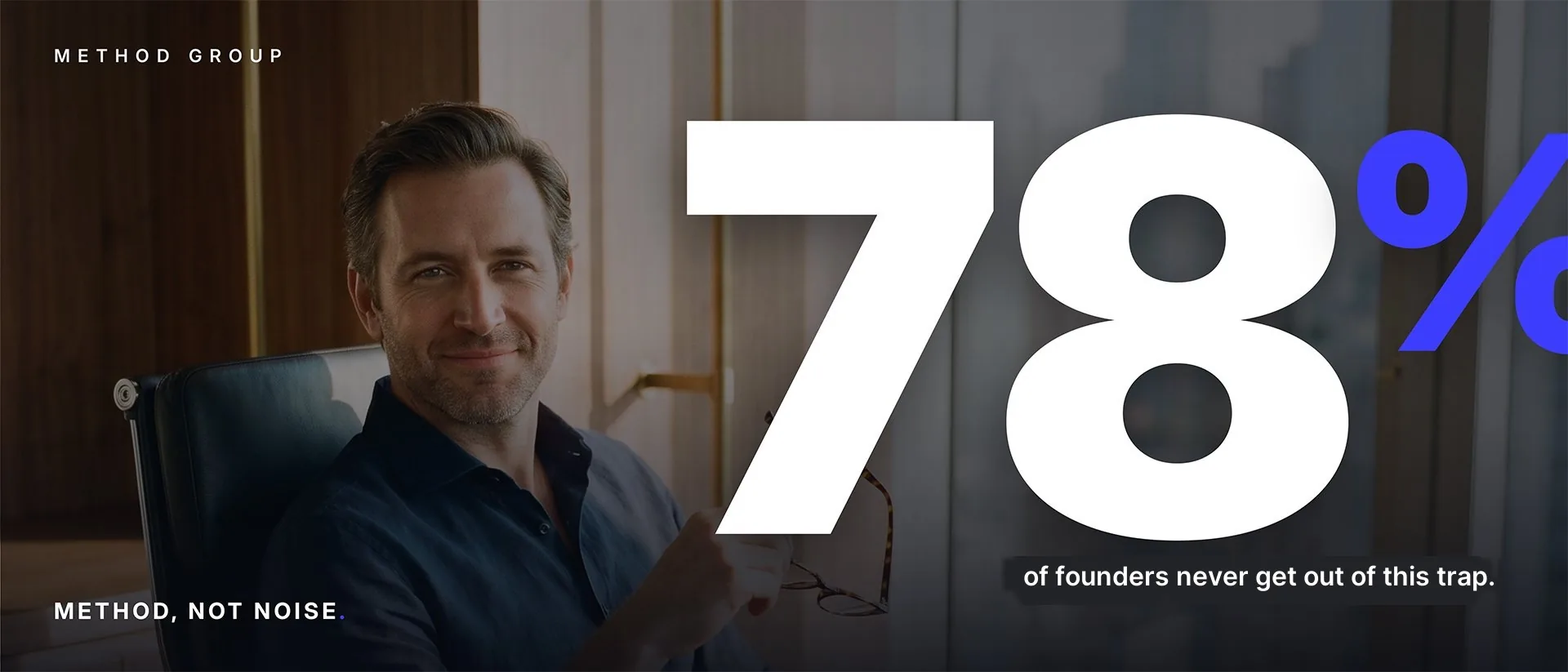
McKinsey reports that 78% of companies that build a product and find product-market fit fail to scale beyond it. One reason sits very close to this subject: the company hits the natural ceiling of early growth, because the way of working that delivered the first stage doesn't deliver the next.
In a small team the founder can be a fast router for decisions.
At greater scale the router starts to clog. People aren't waiting on a system. They're waiting on a person.
What it looks like in practice
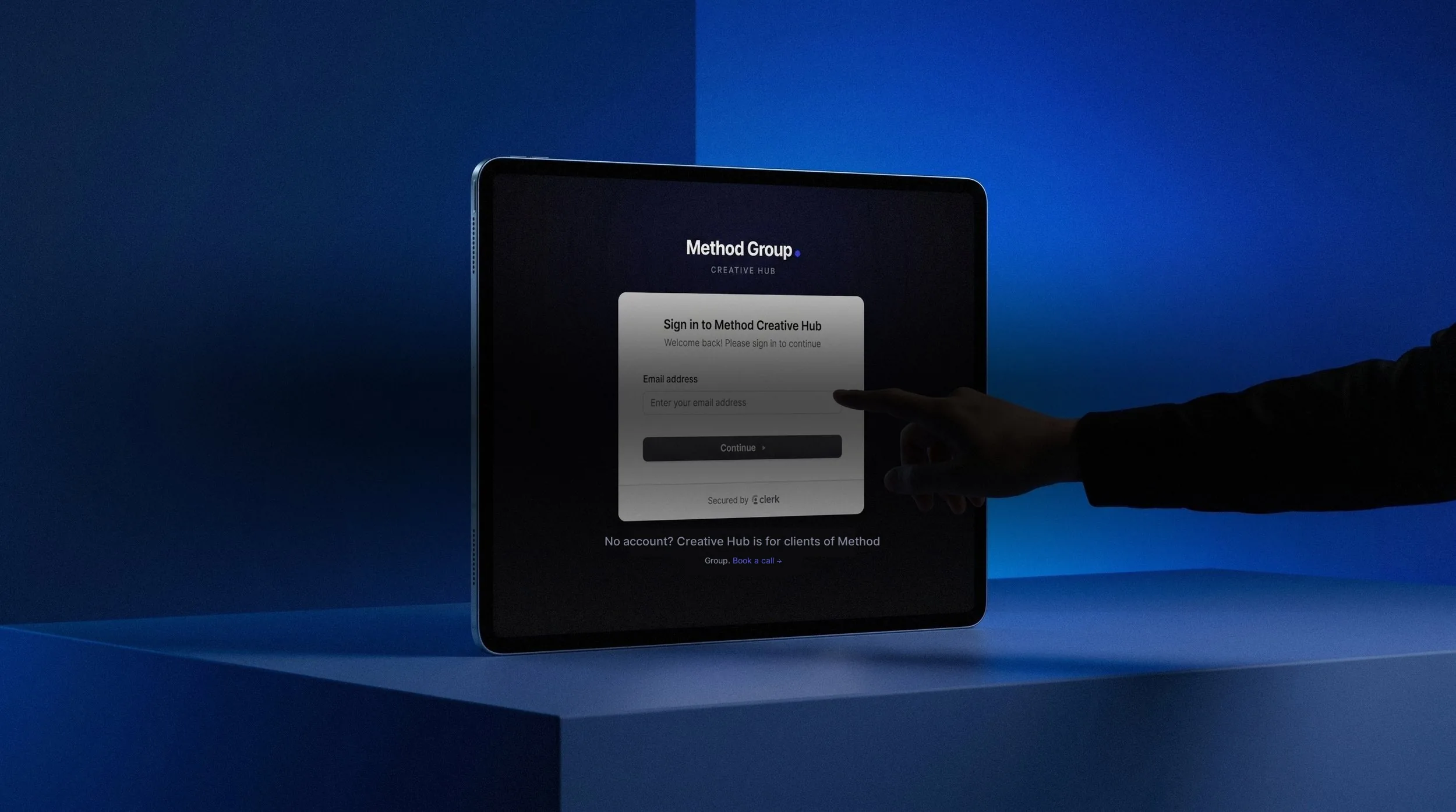
Your projects in one place
See how it works: Method Creative Hub
In an owner-led company the bottleneck rarely shows up as one big failure. More often as a series of small dependencies.
Someone wants to send an offer but needs the tone confirmed. Sales wants to answer a client but is waiting on the current argument. Marketing has the material but doesn't know whether it's the final version. A new starter has a task but doesn't know the standard. A manager wants to close the week but the statuses live in conversations.
Each of these is small. Together they make a company that runs on the memory of one or two people.
The founder usually says: it's quicker if I do it myself. And they're right. Once.
The problem starts on the fiftieth time.
An example: an interiors studio and its booking
An interior design studio ran paid online consultations and a booking system costing about 400 PLN a month. On top of that came chasing the client by hand: had they got the confirmation, did they know how to prepare, would they remember the meeting, did they get a next step afterwards.
In a company like that the founder very easily becomes the calendar, the reception desk and quality control all at once. From the outside it doesn't look dramatic. A few messages, a few reminders, a quick check.
But it's precisely the kind of work that quietly eats your attention.
After the change the booking system cost nothing a month, and the client was guided by email: preparation before the session, a reminder and a follow-up afterwards. Saving 400 PLN a month is pleasant. The greater value is elsewhere: the owner no longer has to check by hand whether the client gets through the process.
Delegating without a system creates a second problem
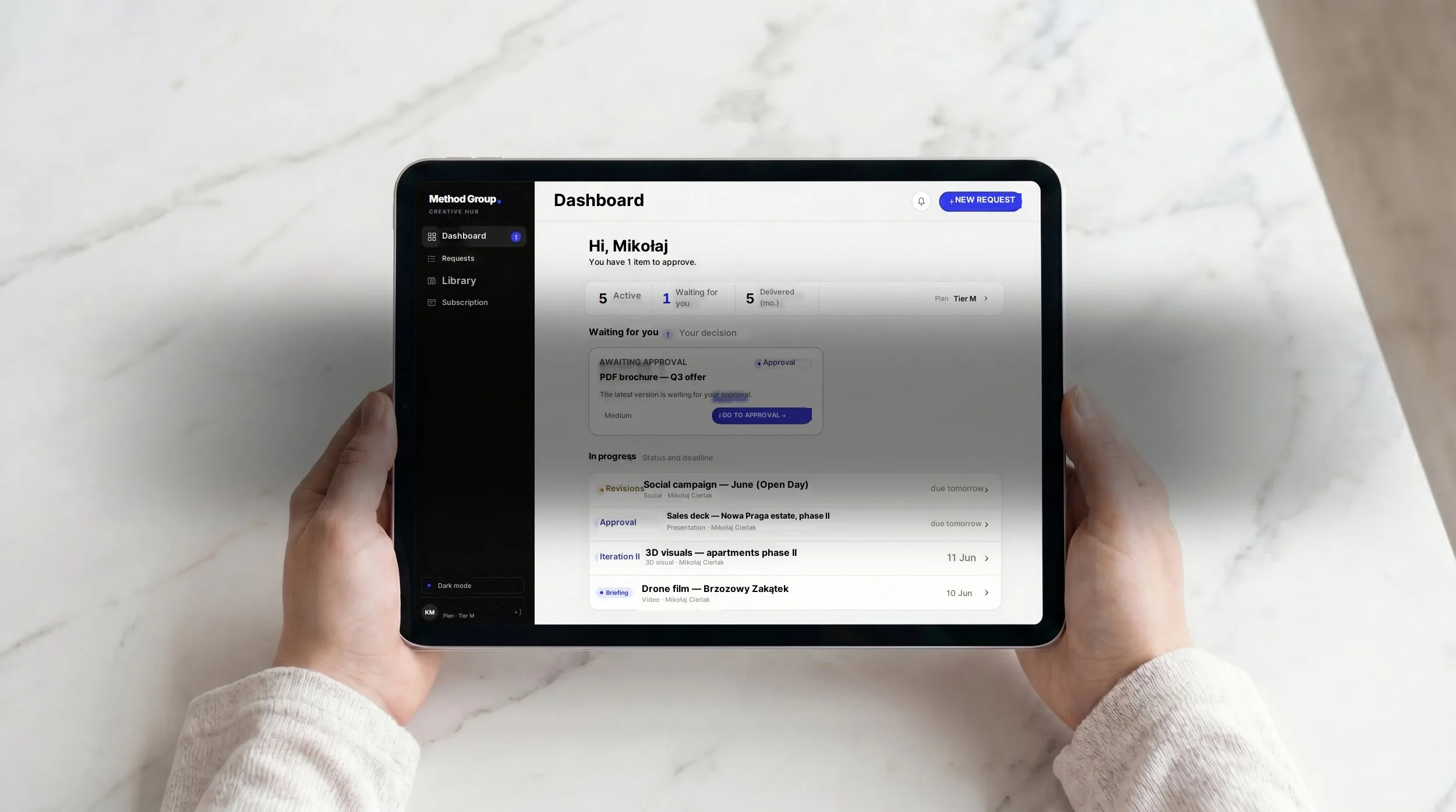
24/7 access for you and your team
See how it works: Method Creative Hub
“Give people responsibility” sounds good but often ends in frustration on both sides.
The founder says: but I handed it over. The team feels: we don't know where the limits of the decision are. And then it all comes back.
Not for want of trust. For want of a frame.
Good delegation needs a few simple things: what a good outcome looks like, where the current knowledge lives, who approves exceptions, what can be done independently, and when to escalate.
Without that, people ask because it's safer. The founder answers because it's faster. And the company learns that the shortest route to a decision runs through the owner.
What to move out of your head and into the system
I wouldn't start by rebuilding the company. I'd start with one area where the owner most often fills in the gaps from memory.
In a training company: lead priority, the next step after an application and handling repeat questions. In an interiors studio: booking, preparing the client and the follow-up after a consultation. At a premium manufacturer: the current technical sheet, the argument for the sales team and the decision on which version of the material is final. At a developer: unit availability, the current presentation and the lead's status.
In each case the question is the same: is the person asking the founder because they need their thinking, or because the company has nowhere to keep the decision?
Where it's genuinely a matter of judgement, instinct or risk, the founder should be close. Where it's a status, a version, a next step or a repeatable answer, the system should take it over.
A founder as bottleneck isn't always someone who can't let go

A dedicated team from day one
See how it works: Method Creative Hub
Often it's someone who was the company's best system for too long. They remembered, decided, rescued, filled in the gaps and watched the quality. That works while the scale is small. After that the company has to get a memory, standards and a decision rhythm of its own.
Otherwise every bit of growth simply adds to the questions coming back to the owner.
See how Creative Hub and Control Room take the manual watching of statuses, versions and decisions off founders from the first project. Book a free call and I'll show you, in one area of your company, where a system could take over what currently lives in your head.
When the company can't move faster than they are available.
At the start, a founder acting as a fast router for decisions is an advantage. They remember what was agreed, know which material is current, know what to say to the client. The problem starts when they have to do the same thing every day at growing scale.
The signals are specific: someone wants to send an offer but needs the tone confirmed; sales is waiting on the current argument; a new starter doesn't know the standard; a manager can't close the week because the statuses live in conversations. Each is small. Together they make a company that runs on one person's memory.
McKinsey reports that 78% of companies that build a product and find product-market fit fail to scale beyond it. One reason is exactly this: the way of working that delivered the first stage doesn't deliver the next.
It's the classic symptom of a growth ceiling that appears when a company grows without a system, not merely without people.
More clients and more work at the same way of working means more questions for the founder, more escalations, more tying up by hand. Harvard Business Review reports that in over half of Polish SMEs the owner still makes most operational decisions. That isn't bad organisation — it's a natural phase every company passes through.
The fix doesn't start with hiring. It starts with one question: what in this company lives in the owner's head that ought to live in a system? Lead priority, the current material for a client, the standard for new work, the next step after a meeting. Once that's in a system, the owner can grow with the company instead of being crushed by it.
By moving the operational knowledge out of their head and into the way the work runs.
This isn't a grand transformation. It's one area where the owner most often fills in the gaps from memory. In a training company it might be lead prioritisation and handling repeat questions. In an interiors studio: booking, preparing the client and the follow-up. At a developer: unit availability, the current presentation and the lead's status.
In each case the question is the same: is someone asking the founder because they need their thinking, or because the company has nowhere to keep the decision? If it's the latter, a system can take it over. The founder stays with judgement, instinct and risk, not with statuses and file versions.
Because delegating without a frame creates a second problem.
The founder says: but I handed it over. The team feels: we don't know where the limits of the decision are. And then it all comes back. Not for want of trust. For want of a frame.
Good delegation needs a few simple things: what a good outcome looks like, where the current knowledge lives, who approves exceptions, what can be done independently, and when to escalate.
Without that, people ask because it's safer. The founder answers because it's faster. And the company learns that the shortest route to a decision runs through the owner. Delegating a task without that frame doesn't solve the problem — it moves it one step along.
Start with one day of observation.
For one day, note every occasion when somebody comes back to you for confirmation. Don't judge whether it's good or bad. Just record the subject and the reason.
In the evening, split them into two groups. First: decisions that genuinely need your judgement — real risk, strategy, reading a situation. Second: questions that came back because there's no clear place holding the current knowledge, status or standard.
Don't treat the second group as a list of things to delegate. It's a list of things to systematise. Every item is somewhere a system could take over work your memory is currently doing.
Repeatable decisions, standards and statuses first. Not strategy.
Strategy and judgement should stay close to the founder. But the status of the current material, the next step after a meeting, a lead's priority, the answer to a question clients keep asking — a system can hold those without any loss of quality.
At a training company with 600 leads, the system took over prioritising enquiries — and for over three weeks the bot escalated nothing to the CEO. That wasn't AI magic. It was a written-down version of what the CEO had been doing from memory, moved into a system that took no holidays and had no off days.
By one question: does the answer require thought, or only knowledge of what's current?
If someone asks “should we take the campaign this way” or “how do we handle this objection” — that needs the founder's judgement. Experience, instinct, risk.
If someone asks “which PDF do I send”, “is this unit still available” or “what's the current version of the presentation” — that's a question about status. The answer is a fact, not a judgement. And if that fact has nowhere to live, every such question lands in the owner's calendar instead of in a system.
Because the company has learned that it works.
Every question that came back to the founder and got a quick answer reinforced the habit. The founder answered because it was faster. The employee asked because it was safer. Nobody did anything wrong.
The problem is that the pattern scales with the company. At three people it's convenient. At fifteen it becomes a bottleneck. At thirty it starts blocking growth.
The fix isn't “handing over responsibility”. It's creating a place where a decision can live without the founder — a current status, a clear standard, one place for the answer. Then questions stop being necessary and become the exception.
By moving the operational knowledge out of their head and into the way the work runs.
Creative Hub is where the request, the version, the feedback and the decision stop living in the head of whoever is running the project. The brief has a structure, material has versions, decisions don't disappear into private messages. A new starter can come in and know what's current without asking the founder.
Control Room does the same on the sales and board side. It removes the manual checking of what's ready, what's stalled, what's missing and where a decision is needed.
When a client buys creative from Method and ends up with a way of working as well, that second part isn't a bonus. It's insurance against the next bottleneck as the company grows.
A new starter can begin without a week of onboarding from the founder. A status doesn't require ringing someone who “will know”. Material has a current version without anyone policing it. Priority doesn't depend on one person's mood or availability.
This isn't a company without a founder. It's a company where the founder can concentrate on what genuinely needs their judgement — strategy, relationships, risk and new directions — instead of being the central server for everyday answers.
At PXCA, once such a system existed, pipeline visibility rose from 30% to 95%, response time fell from two days to four hours, and the company grew from 9 to 24 people without operations falling apart. Not because the founder let go. Because the system started doing what they had been doing from memory.