2026-05-17 · Blog
How to get a developer's sales office ready before the campaign starts
Details

The campaign goes live, leads start arriving, and the sales office is still working out its answers. Here's why a launch is won by how ready sales is, not by how good the advertising is.

Launching a development — why the sales office can't keep up with the campaign
A campaign generates attention, but it's the sales office that has to turn attention into trust. If knowledge of the development sits in a few people's heads rather than in one system, every new project starts by recreating the same chaos.
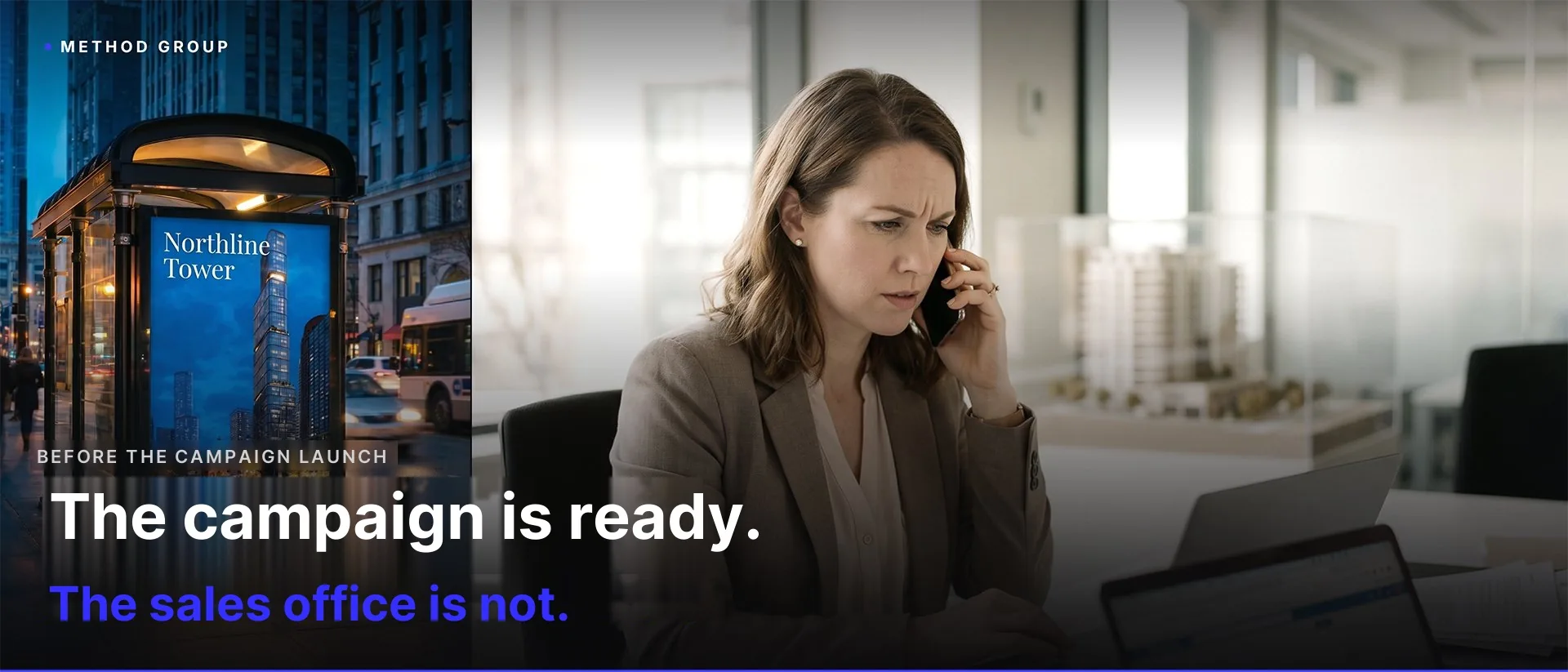
The sale of a new development rarely goes wrong on the day the campaign launches. Some of the problems start earlier, when the material is almost ready but the sales office still has no single way of working.
The landing page may be ready, the renders approved, the campaign set up and the board braced for the first leads. And the advisers are still working out in their heads the answers to the questions a buyer will ask after first contact: which apartments are free, how this scheme differs from the competitor across the road, whether the price has changed, exactly what the specification includes and what to send after the call.
If the answers to those questions live in your best adviser's head, you don't have a sales process. You have one person's talent. And one person's talent scales a launch badly.
The campaign isn't enough
In property development it's easy to confuse the sales launch with the marketing launch. The company creates the development's identity, builds a landing page, commissions renders, switches on the campaign and puts the listing on the portals. All of that is necessary, but the sales office works somewhere other than the campaign does.
The campaign's job is to generate interest. Sales' job is to walk a person through a decision.
An apartment in a new development is often still a promise. The buyer isn't only buying floor area. They're buying a completion date, a location, a specification, the developer's credibility and the assurance that nothing will come up that nobody mentioned.
So an adviser can't answer every specific question with: let me check and come back to you. They need the current version of reality to hand, during the conversation rather than an hour of searching through folders and messages later.
Buyers do more themselves
This isn't just instinct. Gartner's 2024 buyer enablement report says 75% of B2B buyers prefer a buying experience with no contact with a salesperson, and 40% of B2B purchases are completed without one.
Property development isn't classic B2B, but the mechanism is similar. Before ringing the sales office, the buyer is already comparing. They look at floor plans, check prices, read reviews, look at the area, send a link to their partner and come back a few days later with a question that sounds like a detail but is in practice an objection blocking the decision.
If the sales office has no ready argument, the buyer senses chaos. And in property development, chaos turns into distrust very quickly.
Otodom's Q3 2025 property sentiment monitor shows how delicate this is. Only 21% of respondents rated developers positively, 48% said they didn't trust them, and 55% disagreed that developers describe their projects honestly.
This isn't a problem another handsome PDF will fix. It's a problem of information consistency, which shapes the quality of the conversation, which shapes trust.
Your best adviser can't be the system
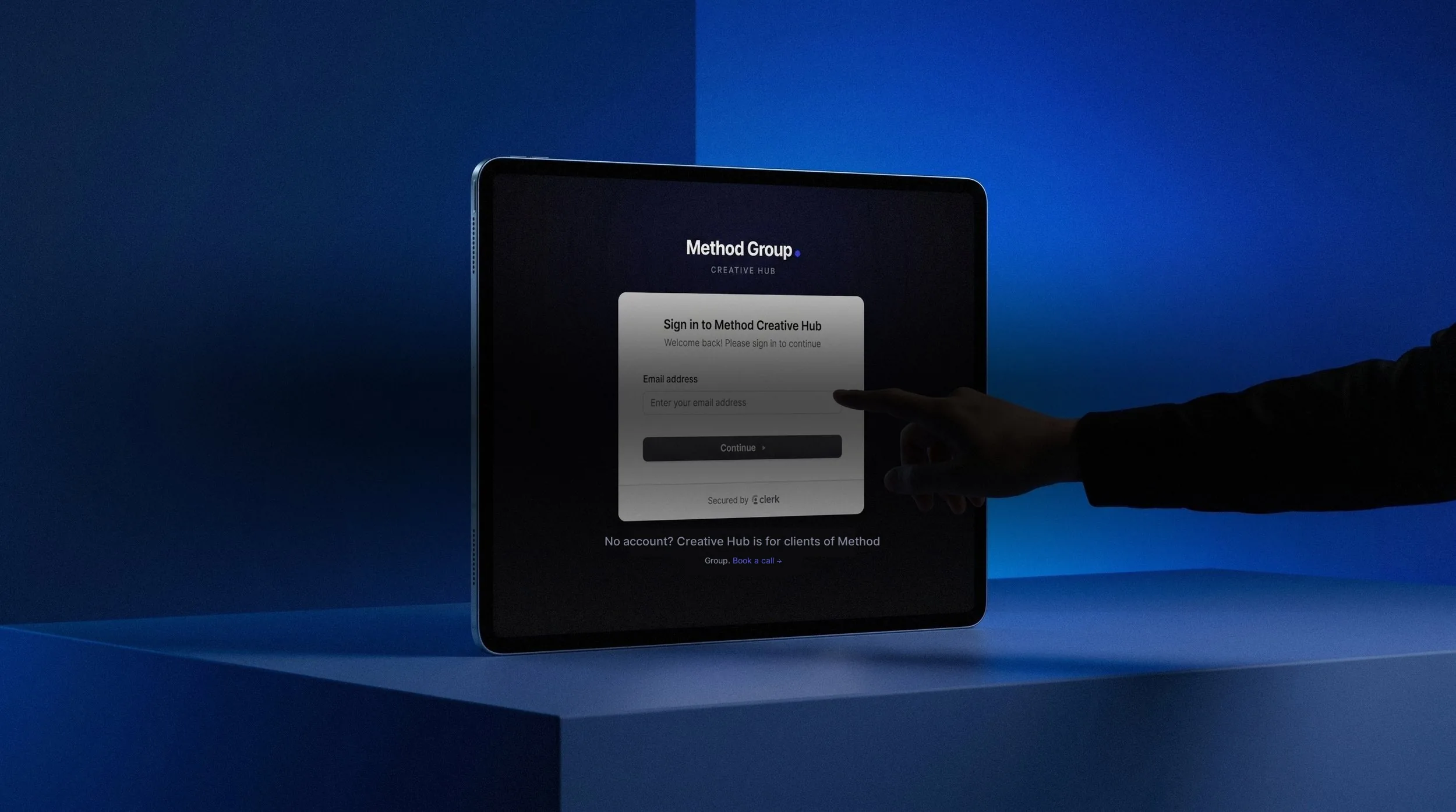
Your projects in one place
See how it works: Method Creative Hub
Every sales office has someone who knows. Which argument works, which question keeps coming, which buyer is close to a decision, what the board said at the last meeting and which piece of material is out of date despite still sitting in the folder.
That's convenient while that person is at their desk. The problem starts when a new development launches and suddenly more people have to speak the same language.
A new adviser doesn't know the nuances yet. Marketing doesn't know which objections came up in the first conversations. The board asks for a status and gets a campaign report instead of a picture of what's blocking sales. The company starts running on a few people's experience rather than on a system.
Buyers spot the difference faster than companies care to admit. One says one thing, another puts it differently, a third sends an older version of the unit sheet. Nobody is acting in bad faith. The knowledge simply has nowhere to live.
What should be ready before launch
I wouldn't start with a big dashboard. I'd start with a simple launch room for sales — one place holding everything the sales office needs for a conversation about the development.
Layer 1 — Current material: landing page, presentation, unit sheets, floor plans, renders, specification, follow-ups. The adviser knows what to use today rather than guessing from a file name.
Layer 2 — Arguments: location, specification, price, how it compares with the alternatives. The buyer hears consistency, not contradictory versions.
Layer 3 — Objections and gaps: the questions that keep coming; what buyers don't understand. Marketing sees the gaps, the board sees which decision is sitting with them.
It can still be a very simple system. But there has to be only one. If the knowledge is in email, private messages and advisers' notes, every new development starts by recreating the same chaos.
Price transparency raises the stakes
Since 2025 keeping data current matters even more. The price transparency act came into force on 11 July 2025, and for most developments the duty to publish started on 11 September 2025.
The price has to be visible on the site immediately, without contacting a salesperson. That changes the sales office's role, because the buyer arrives with more data but not always with more confidence.
Sometimes the opposite happens. The more they see, the more precise their questions: why does this unit cost that, what has changed in the price, does a similar apartment in another scheme offer better value, and is what they're seeing on the site current.
If sales' answer doesn't match what the buyer sees on the website, the problem isn't cosmetic. It goes straight to trust.
Case: four developments, 65 apartments, a system in a day
The simplest proof comes from work with a developer running four schemes and around 65 apartments. Before the system, the units lived in Excel, enquiries landed in an inbox and the listing on the website had to be updated by hand.
At first that chaos looks harmless. Until a lead asks about a unit with the wrong status, an adviser doesn't know whether the price on the site is current, or somebody has to assemble a report from several places at once.
We built one place for units and enquiries, a form that captures and replies by itself, and a live listing on the website.
The result: a system in one day, no enquiries lost, a listing that is always current.
It wasn't yet a full Control Room in the Method sense, but the mechanism is the same. Sales doesn't only need more material. It needs certainty that it's working from the current version of reality.
When improvising in the sales office is enough
To be fair: not every developer needs this from day one.
If you're running one development with one experienced adviser and low volume, that person's talent is usually enough. The owner watches prices and statuses themselves, and it all fits in one head and one spreadsheet.
A launch room starts paying off when there are several developments, when new people join the office, or when the volume of leads outgrows one person's memory. Which is precisely the point at which most premium developers begin to scale.
At that point, having no system isn't a saving. It's a hidden cost.
Where Control Room comes in
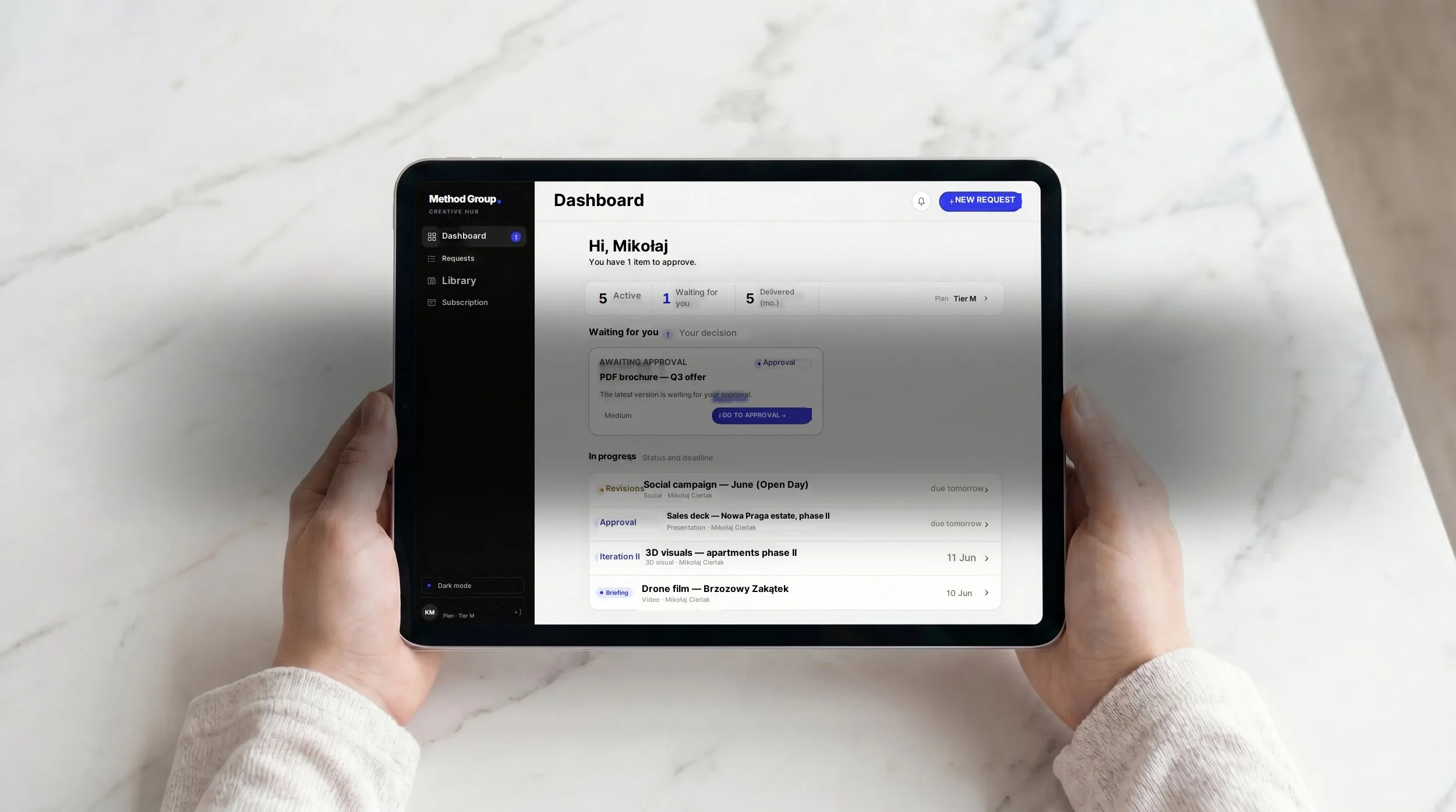
24/7 access for you and your team
See how it works: Method Creative Hub
Control Room isn't a replacement for a CRM. Nor is it another place for the sales team to fill in so the board gets a pretty dashboard.
Its role is simpler: to show marketing, sales and the board the same situation. What's ready, what's missing, which material is current, which objections keep coming, what's blocking the close and who has to decide.
W Method Creative Hub puts the production of material in order, and Control Room puts its use in sales in order. For a new development that's the difference between “the campaign has started, let's see what happens” and “the sales office has the full set of arguments, current material and somewhere to give feedback from day one”.
If you run marketing or sales at a developer, go back to your last launch and check four things
Did every adviser know which material was current? Did you have a list of the commonest objections after the first twenty conversations? Could marketing see what sales was missing in the follow-up? Did the board have a view of the blockages, not just the lead count?
If you can't answer, it isn't one adviser's problem. It's the absence of a system.
The better the campaign, the more that gap hurts. A good campaign delivers attention, but it's the sales office that has to turn attention into trust. Trust isn't built by improvising. It's built on consistency, currency and a quick answer to the buyer's real question.
You win a launch on readiness. Not on the campaign.

A dedicated team from day one
See how it works: Method Creative Hub
If knowledge of a development lives in a few people's heads, every new project starts by recreating the chaos. If it lives in one place, the campaign has something to work with.
Does your sales office have a system for a launch, or is it learning one on live leads?
See how Control Room gives a sales office the full set of current material and arguments from day one. Book a free launch audit — we'll go through your last development and I'll show you where the momentum is lost between the campaign and the close.
Three layers, in one place.
The first is current material — landing page, presentation, unit sheets, floor plans, renders, specification and ready-made follow-ups. Not a folder of files, but an answer to: what do I use today, and at what point in the conversation.
The second is arguments — consistent answers to questions about location, specification, price and how it compares with competing schemes. If every adviser explains the same thing differently, the buyer hears chaos.
The third is a place for objections and gaps — the questions that keep coming after the first conversations, what buyers don't understand and which material is missing. Marketing sees the gaps; the board sees which decisions haven't been made.
Without those three layers, the campaign delivers attention that the sales office loses in the first conversations.
Because knowledge of the development sits in several places at once — some in the best adviser's head, some in email, some in a folder, some in the last update from the board. Nobody brought it into one place before sales opened.
When buying an apartment, people judge a developer not only on the specification but on the quality of the conversation. If the adviser asks for patience at every specific question, the buyer senses chaos. And in property development, chaos turns into distrust very quickly.
The answer isn't better training for advisers. It's giving them the current version of reality to hand — during the conversation, not an hour of searching later.
Start by auditing your last launch. Four questions that show where the problem is.
Did every adviser know which material was current? Did you have a list of the commonest objections after the first twenty conversations? Could marketing see what sales was missing in the follow-up? Did the board have a view of the blockages, not just the lead count?
If you can't answer any one of those, you know where to look for the problem. Not in the campaign, not in the renders, not in the price. In the absence of one place where sales works from the current version of the development.
It fundamentally changes where a conversation with a client begins. Since 11 July 2025 prices have to be public on the website, with no need to contact a sales rep. Since 11 September 2025 this applies to every development, regardless of when its sales started.
The buyer arrives with more knowledge and sharper questions. What a particular unit costs, what has changed in the price, whether a similar apartment in the scheme next door offers better value.
Market data shows that in August and September 2025 a full 25% of all apartments on offer had their price revised. In Warsaw alone that affected nearly 14% of listings, in Łódź over 26% and in Kraków over 20%.
If an adviser's answer doesn't match what the buyer saw on the website, the problem isn't cosmetic. It goes straight to trust. And 48% of buyers already say they don't trust developers — Otodom sentiment monitor, Q3 2025.
A launch room is one place with everything needed for a conversation about the development. Not another tool, another folder or another Slack channel.
One place where the adviser knows what to look for, the buyer hears consistency and marketing sees what's missing.
In practice it holds three things: current material with a context of use (not “presentation_v7_final_final.pdf” but “presentation for a buyer after first contact, current since March”), consistent arguments for the usual questions and objections, and a place where sales can report what's missing after the first conversations.
At a developer with four schemes and 65 apartments, a basic system for units and enquiries was up in a day. It doesn't need a big rollout. It needs one place that replaces email, Excel and private messages.
While you're running one development with one experienced adviser and low volume, that person's talent is usually enough. The owner watches prices and statuses themselves, and it all fits in one head and one spreadsheet.
The problem starts in three situations: when there are several developments each with their own statuses and prices; when new people join who don't know the nuances; or when the volume of leads outgrows one person's memory.
That's precisely the point at which most premium developers begin to scale. At that point, having no system isn't a saving.
Lead count tells you how many people were interested. The blockages tell you why some of them didn't buy.
The difference is simple: a campaign report shows what came in; Control Room shows where it stopped. Which objections come back after every conversation. Which material sales lacks when closing. Which decision is sitting with the board and blocking everything else.
Without that visibility the board reacts after the event — hearing a month later that “the campaign was good but sales are slow”. With it, they can react after the first twenty conversations and change something before the problem gets expensive.
The fastest onboarding isn't training but access to the knowledge that already exists in the company.
If the sales arguments, the usual objections, the current price list and the current material live in one person's head, a new adviser needs weeks to get up to speed. And they'll never be fully up to speed, because they weren't at all the meetings.
If the same knowledge is written down in one place, a new adviser can hold their first conversation on their first day. Not perfectly, but consistently enough that the buyer doesn't feel the difference between advisers.
It's also the only real answer to: what happens when your best adviser goes on holiday?
A CRM holds leads, stages and contact history. It's an adviser's tool for running a process with a particular buyer.
Control Room works at a different level. It shows marketing, sales and the board the same situation at the same time. What's ready, what's missing, which material is current, which objections keep coming and what's blocking the close.
Neither replaces the other. A CRM tells you what's happening with a lead. Control Room tells you what's happening with the development.
For a sales office handling several developments and several advisers at once, that's the difference between managing on questions and managing on data.
Scaling a sales office isn't about hiring more advisers. It's about every adviser working from the same current version of reality — whichever development they're on.
In practice that means one central place with current material and arguments for each development separately, one way of collecting objections from conversations, and one view for the board showing where the momentum is and where the blockage is.
Without it, every new development is fresh chaos to recreate from scratch. With it, each development builds on what the last one learned.