2026-03-29 · Blog
Chaos in the marketing department. Why you have a team and production still stalls
Details
You have people, a strategy and ideas — and the material still doesn't get made. Here's why a marketing department can't keep up with production, and how to fix it without more hires and more training.

Your marketing team has 40 ideas and the capacity for 2 out of 10
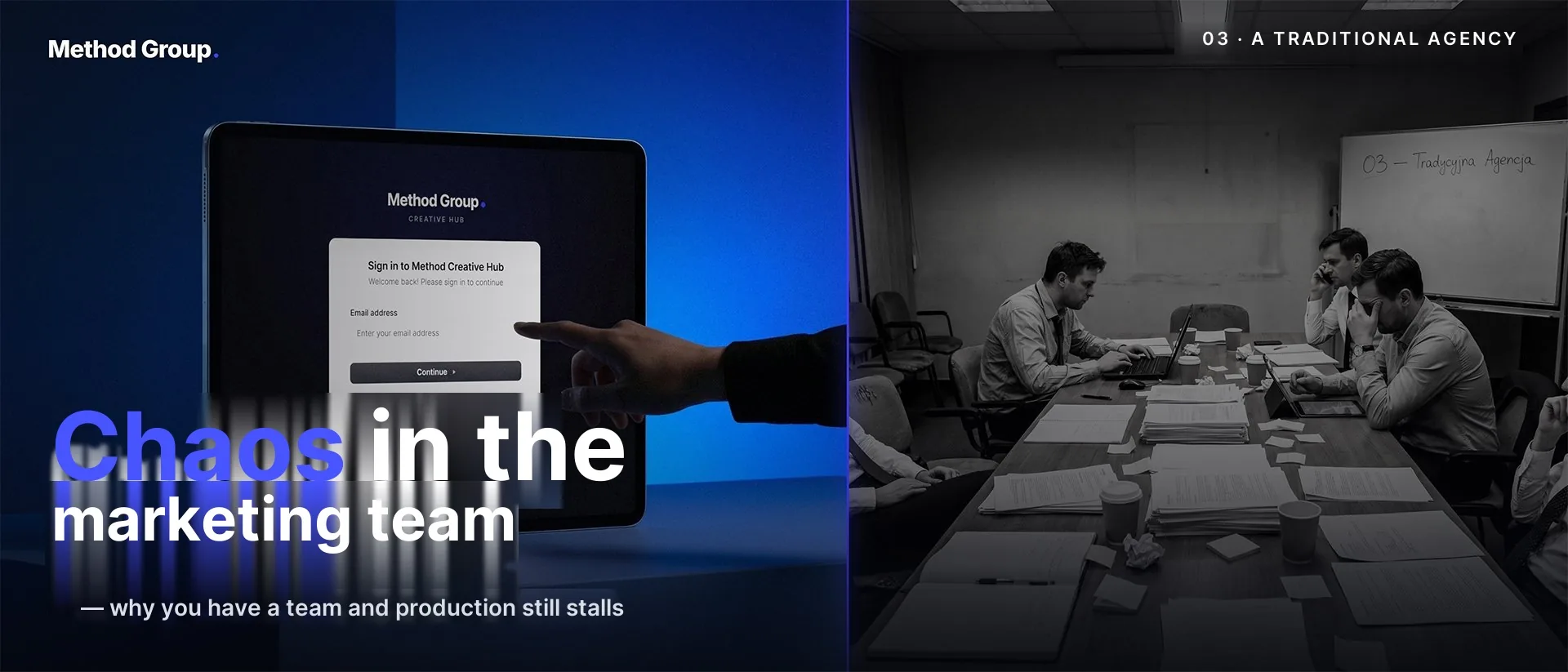
You have a strategy. You have people. You have a to-do list growing faster than it could ever be worked through. A campaign has been waiting three weeks. The brief is ready. The material isn't.
This isn't only your company's problem. It's the commonest reason promising brands spend years looking worse than they are — and lose ground to competitors who simply deliver faster.
In this piece we show where that gap really comes from — and why most companies try to close it the wrong way.
Why a marketing department can't keep up — the real reason
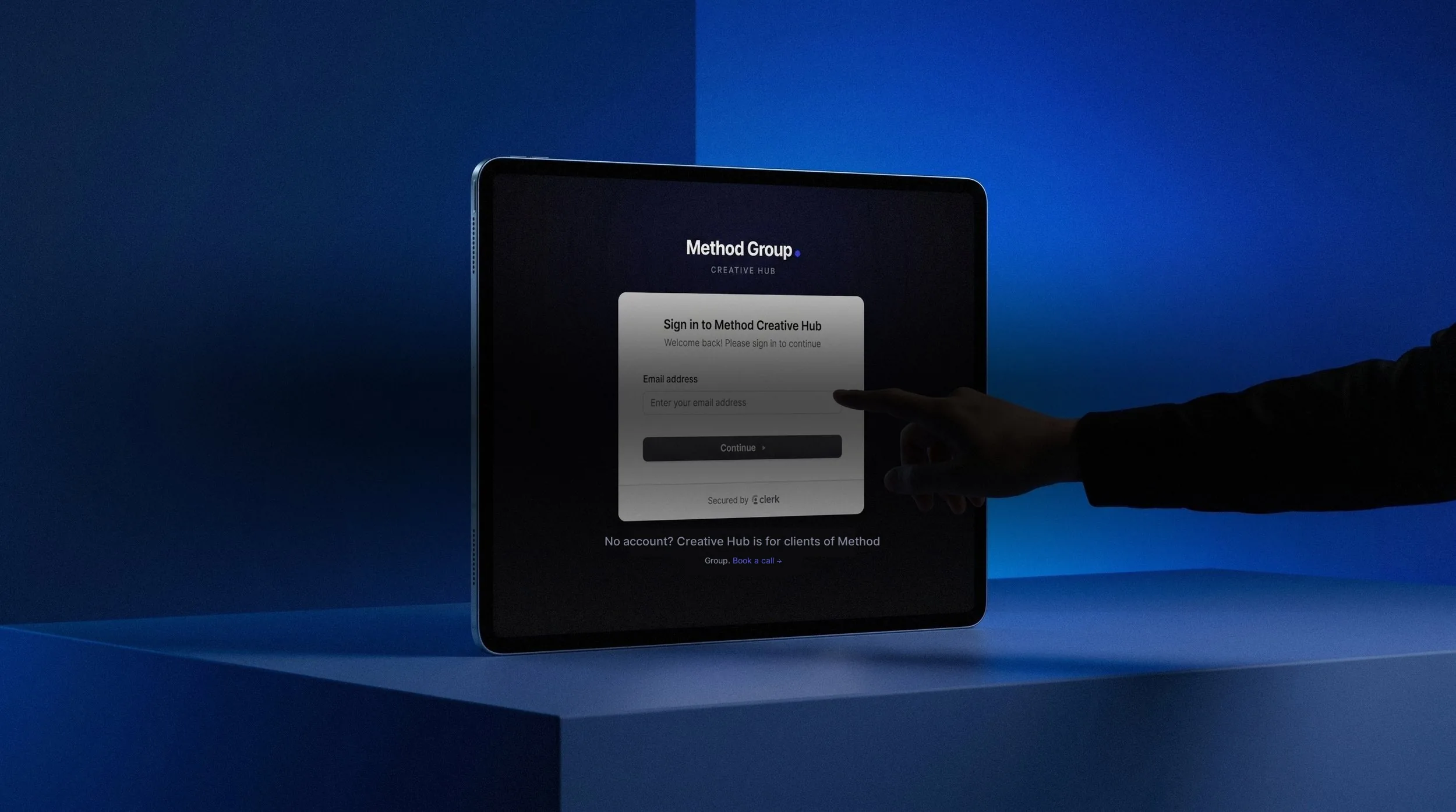
Your projects in one place
See how it works: Method Creative Hub
When a company notices that creative production can't keep up, it usually reaches for one of three answers. It sends the team on training. It hires someone new. It looks for a freelancer or an agency. All three have the same flaw — they address people, not the system.
Training rarely translates straight into production. The knowledge comes back to the company but there's nobody to put it into practice. Nobody watches the quality of the output. The company invests in skills and the backlog keeps growing.
A new in-house hire — even a good one — needs months to understand the brand and its visual language. And if nobody in the company has experience of art direction or creative direction, nobody can guide them. The result: the person produces, but not in the right direction. And nobody sees it until it's too late.
A freelancer or an outside agency — apparently the fastest answer — creates a different problem. When several suppliers with different visions work on one brand at the same time, consistency exists only on paper. In practice every piece looks as though it came from a different company.
Companies lose not because they have poor people. They lose because they have no system that turns ideas into finished assets — consistently, on time, in one visual character.
What decision-makers are really afraid of — and rarely say
There's one problem that comes up in almost every conversation with owners and marketing directors — and hardly anyone admits to it openly: “Joining the dots”.
Coordinating a branding agency, a social media freelancer, a video studio and an in-house designer is a full-time job. Each supplier has its own vision, its own priorities and its own rhythm. The decision-maker, instead of concentrating on strategy, becomes a project manager in all but name — one with neither the tools nor the authority to keep everyone pointing the same way.
And there's a problem discussed even less: no experience of art direction or creative direction on the client's side. To manage several creative suppliers at once you have to be able to judge their work. To know what's good and what merely looks good in the first meeting. To give feedback that changes something rather than delaying the project by another week.
Most companies don't have that experience. And nobody tells them that this is exactly why every investment in creative production returns less than it should.
What it looks like in practice
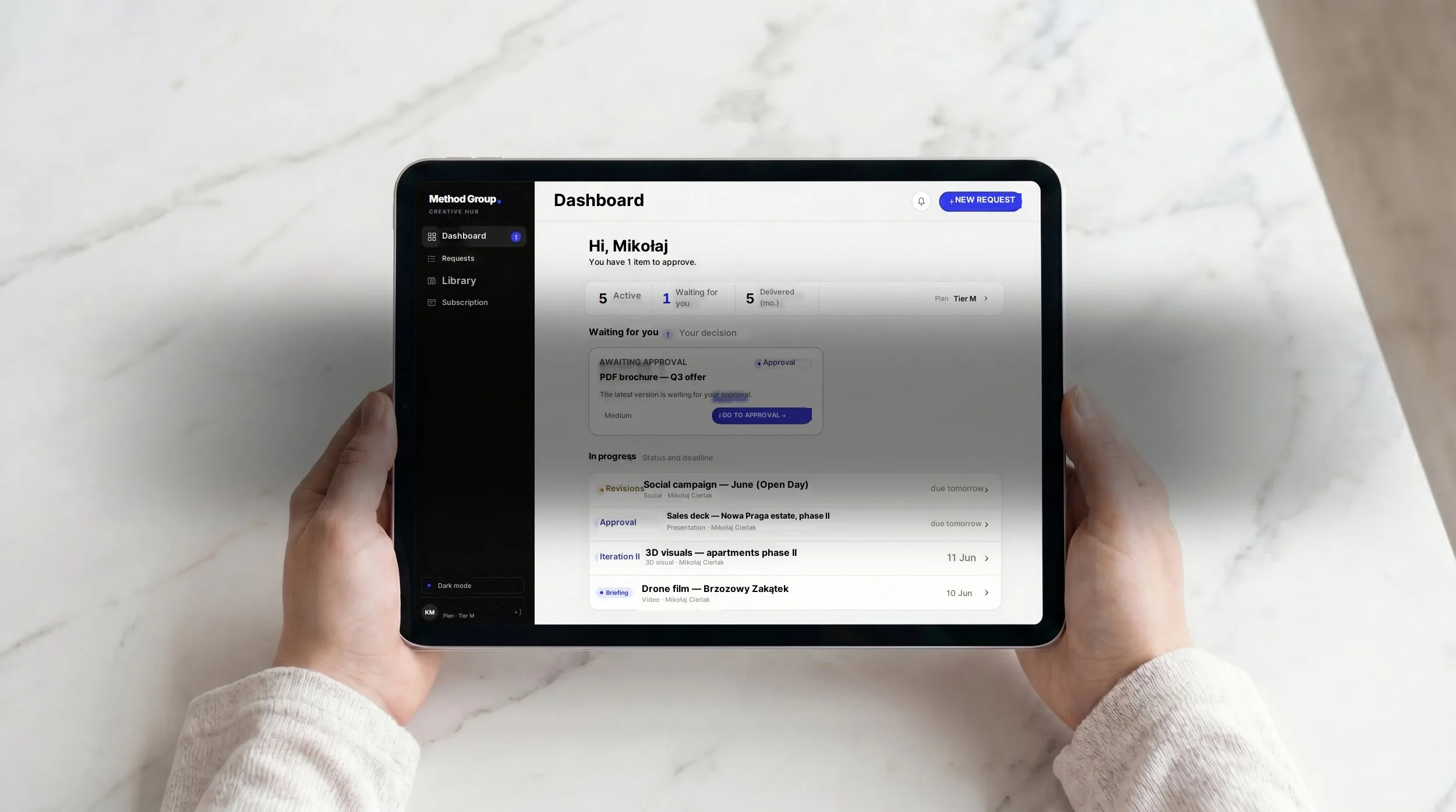
Round-the-clock access for you and your team
See how it works: Method Creative Hub
A company in finishing materials. National reach. Excellent specialists with deep product knowledge. The brand knew exactly who it wanted to be — and for years couldn't show it.
It tried combining different suppliers: agencies, freelancers, in-house resource. Results came — but every piece looked slightly different. Website, branding, e-commerce material, distributor presentations — each spoke in a different voice. The freelancers delivered good work, but on their own terms and their own schedule. The company was hostage to other people's calendars and other people's readings of its brand.
The result was paradoxical. A brand with a premium product looked mid-market. Not because the products were poor. Because its visual side, at every point of contact with a customer, didn't convey what it actually was.
Over twelve months with Method, several thousand images and animations were produced — all in one consistent visual character worked out with the brand's whole team. The material went to every distributor as a coherent campaign in its own right. In parallel we produced:
texture packs for architects and interior designers
training material for trade partners
films showing how the 3D assets work in practice in different design software
creative adapted for social media, e-commerce and work with industry influencers
One system. One vision. No coordinating between independent suppliers.
Today the brand is steadily growing in customers' eyes as a premium company — because everywhere its customer meets it, they see the same standard.
What actually solves the creative production problem
Not another training course. Not another freelancer. Not another agency promising end-to-end service that turns out, three months later, to be as chaotic as the last.
The answer is one place responsible for all the creative production — with one vision, one quality standard and one point of contact.
You don't then need to know who the art director is. You don't need to coordinate five suppliers. You don't need to explain the brief four times to four people who each read it differently. Your team concentrates on strategy and selling. Production simply works.
That's exactly how Method Creative Hub works — a subscription creative system where your company gets a dedicated team covering CGI, motion design, UI/UX, branding and advertising. One brief. One point of responsibility. First material within 48 hours.
Does this apply to your company?

A dedicated team from day one
See how it works: Method Creative Hub
If you recognise even one of these:
Your brief has been ready for weeks and the material still isn't there
Different pieces of your brand's material look as though they came from different companies
You hired someone to produce, and the results aren't what you expected
Coordinating suppliers takes more time than the strategy does
Your brand looks mid-market while playing in a higher league
— then you probably have the same problem as the company in this story. And the answer is probably simpler than you think.
See how Method Creative Hub works — and book a free walkthrough to see how we can have production running within 48 hours of the first brief.
Because the problem isn't the people — it's the system. When several suppliers with different visions work on one brand at once, the decision-maker becomes a full-time project manager in all but name. Instead of concentrating on strategy they join the dots between a branding agency, a social media freelancer, a video studio and an in-house designer. None of them is responsible for the whole — so the whole doesn't work.
Because you're hostage to other people's calendars and other people's priorities. Freelancers and outside agencies have other clients, other deadlines and their own rhythm. Your brief joins a queue rather than going to the top of the pile. A set-up with no single point of responsibility for all the production will always run late — however good the brief.
Not with another hire or another training course — both address people, not the system. The backlog grows because the company has no single place responsible for turning ideas into finished assets. The answer is a system that works consistently, on time, in one visual character — without having to coordinate several independent suppliers at once.
Because it probably did. When a branding agency, a social media freelancer and an in-house designer work independently, each reads the brand its own way. Consistency exists only on the paper the brief is written on. In practice every supplier has its own vision and its own aesthetic habits. The only route to real consistency is one team, one vision and one quality standard across all production.
More than you think — and more than you ever put in the budget. Coordinating several creative suppliers is a full-time job with neither the tools nor the authority to keep everyone pointing the same way. On top come briefing, giving feedback, revisions and chasing deadlines — for each of them separately. That cost is real and invisible in every spreadsheet.
Because the knowledge comes back but the backlog doesn't go away. Training builds skills — it doesn't add capacity, doesn't speed up production and doesn't solve the problem of coordinating several suppliers. The company invests in its team and the list of unmade material keeps growing. The problem is structural, not one of skills.
Usually for one reason: no art direction on the company's side. A new hire needs months to understand the brand and its visual language. If nobody in the company has experience assessing creative work and giving feedback that changes something, the designer produces — but not in the right direction. And nobody sees it until it's too late.
By handing all the creative production to one place with one point of responsibility. When you don't have to coordinate five suppliers, explain the brief four times to four different people and chase other people's deadlines, your time goes back to strategy and selling. Production simply runs in the background.
Because every point of contact shows a different standard. The website speaks in one voice, social media in another, distributor material in a third. The customer doesn't see the product — they see the communication. If the communication is inconsistent, the brand lands a shelf lower than it deserves. That's exactly the problem solved by the finishing-materials brand described here: over twelve months with Method, thousands of images and animations were produced in one consistent visual character.
Through one place responsible for all of it — one vision, one quality standard, one point of contact. Not another headcount, not another freelancer, not another agency promising end-to-end service. A system that turns briefs into finished assets consistently and on time, without building an internal department from scratch.