2026-04-26 · Blog
Creative agencies. What you're really paying for, and when it makes no sense
Details
55% of companies plan to change agency within six months. Not because the creative is bad — because the model doesn't work. Here's what you're really paying for and when an agency stops making sense.

Why your agency is lying to you, and why you let it
Clients always complain about the same thing. Too expensive.
Agencies always answer the same way. Quality costs.
We employ seniors. We have processes. We have strategists. We have account managers looking after your project. And there's the problem. Because you're paying for all of it. Not just for the design you got at the end.
I'm writing this as someone who sat on the other side of the table. I worked in the agency model for years. I saw from the inside what an invoice looks like before it reaches the client. And I know exactly what a client pays for — and what they shouldn't be paying for.
Do read on.
Mikołaj Cierlak
What's really in an agency's price
Let's start with numbers. Not opinions — numbers.
The financial model of a traditional creative agency works like this. Labour — the salaries of designers, copywriters, project managers and account managers — accounts for 60–70% of agency revenue. Overhead, meaning office rent, Adobe licences, AI tools, insurance and administration, takes another 14–20%. The agency's net margin: 10–20%.
Which means one thing: when you pay an agency for a project, a large share of that money doesn't reach the person making your material. It goes to the structure servicing the project.
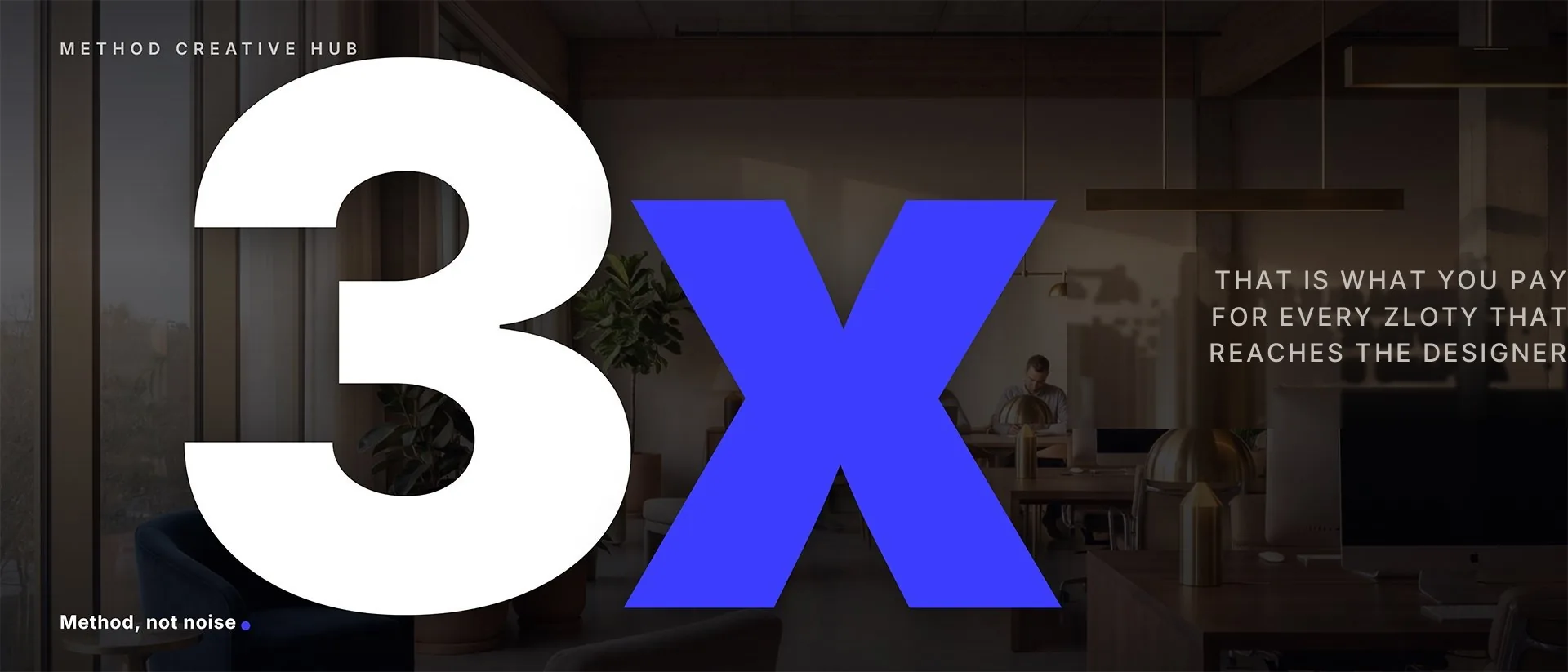
And that isn't all. The standard agency multiplier is 3× the cost of the employee. So for every złoty that actually reaches the designer working on your project, you pay three. The rest is overhead and margin.
I'm not saying that's dishonest. I'm saying it's worth knowing what you're paying for.
What exactly you're paying for — the hourly breakdown
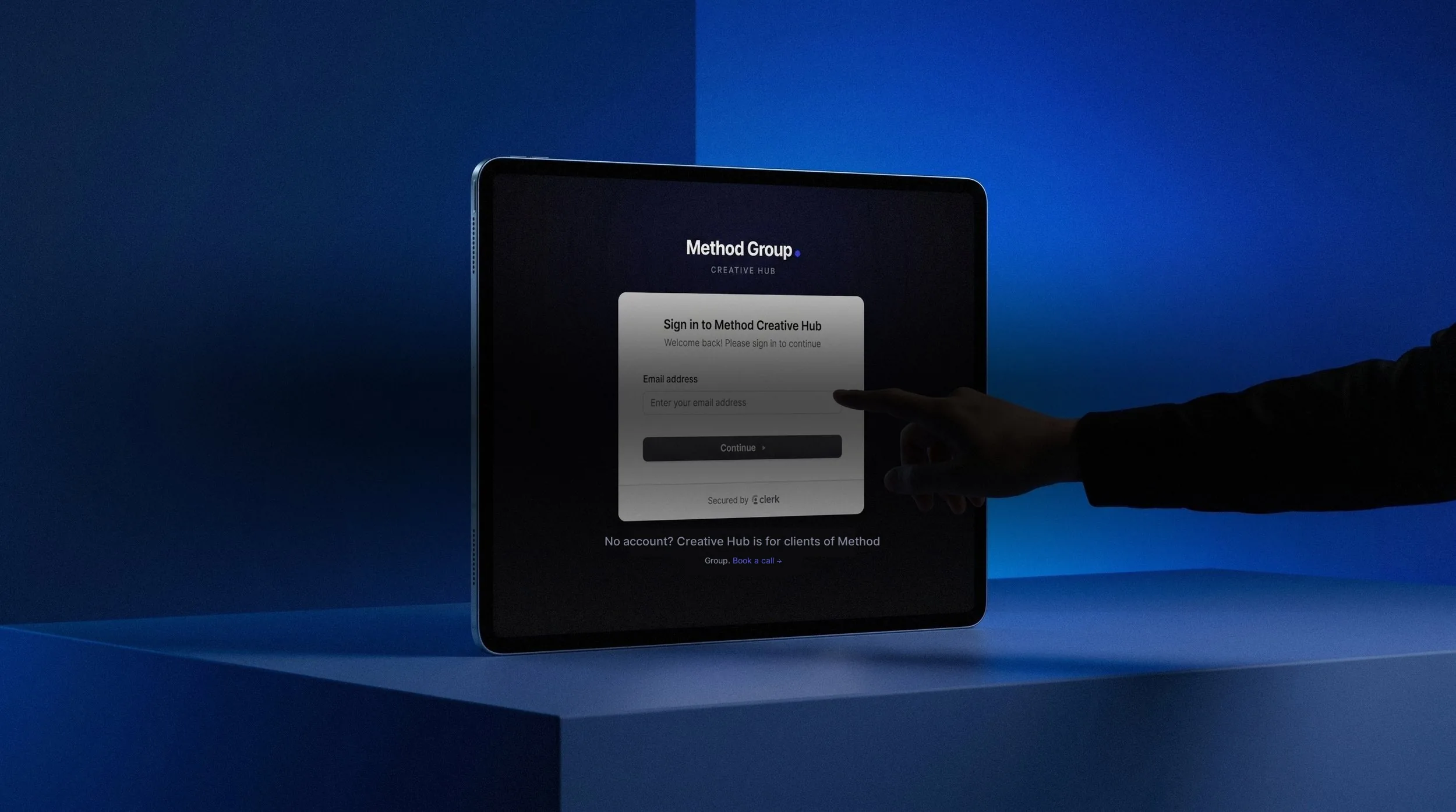
Your projects in one place
See how it works: Method Creative Hub
The SAR 2025 report on salaries and hourly rates shows the reality of the Polish agency market. An hour of a Creative Group Head's time: 300 PLN net. Senior Copywriter: 250 PLN. Account Director: 200–280 PLN. Digital Project Manager: much the same.
But here's the question few people ask out loud: how many of those hours are actually producing your material, and how many are meetings, status calls, internal briefs and approval loops?
According to the global State of Work report (Workfront/Adobe), creative staff spend just 40–43% of their working week on their core duties. The other 57–60% goes on meetings, email, multi-stage internal approvals and sorting out operational problems.
In other words: of the eight hours an agency bills to your project, fewer than four are time in which somebody is actually producing something. The rest is the cost of running the structure.
You pay for 8 hours. You get 3–4 hours of production.
Why companies keep going back to agencies anyway
Because the agency model solves one real problem: the client's lack of production capacity.
Companies come to an agency for one of three reasons. They're commissioning material they can't produce themselves. Their team can't keep up. Or — most commonly — their team doesn't know what to do, so it looks for expertise outside and still can't keep up.
And here's the friction I've been watching for years.
Agencies — especially small studios aspiring to be agencies — want to demonstrate knowledge and expertise. That's natural. They build processes, write strategies, run discovery workshops, present brand guidelines. All of it has value.
But very often the client doesn't need it. The client needs hands. They need the material made on time, done properly and visually consistent with the brand. A good brief, solid research and production control are enough.
Instead they get a full strategic apparatus that looks beautiful in a proposal — and pushes the price up considerably.
Working with an agency is like configuring a car online
There's a moment on a car maker's website when you're sitting at the configurator adding options. Panoramic roof. Leather upholstery. Premium sound system. Augmented-reality lane assist. An hour later you have your dream car at the price of two flats.
Working with an agency often looks much the same. You can have a wonderful time in the configurator building that gleaming red dream. But the business you actually run needs reliable delivery far more often than it needs everyone pretending to reinvent the wheel in order to make something “perfect” that doesn't even lift conversion.
Sometimes you simply have to make the thing. It sounds unromantic. But a business has to keep moving — and what matters to a business is delivery on time, done properly, at a quality that holds it all together.
The numbers agencies would rather you didn't know
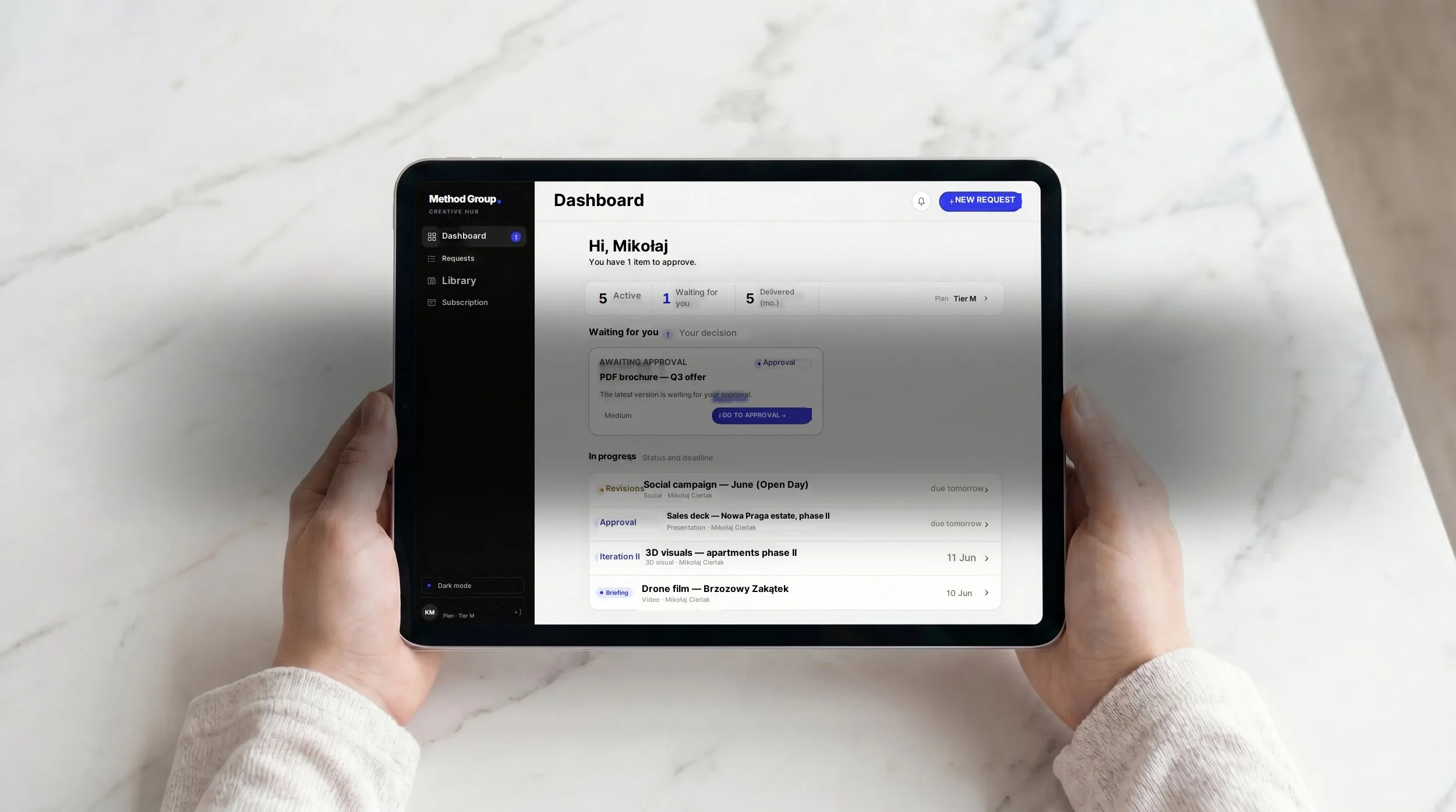
24/7 access for you and your team
See how it works: Method Creative Hub
55% of clients are ready to change their lead agency within the next six months. Half of all companies have ended a relationship with at least one agency in the past two years.
The main reason for the split isn't poor creative. It's a lack of value for money — the sense that what you get isn't worth what you pay. That figure rose from 39% in 2022 to 53% by the end of 2023. It climbs year on year.
On top of that comes the phenomenon the industry calls the “honeymoon” — the agency is engaged and responsive for as long as the pitch and the first months last. Then come routine, staff turnover and falling engagement. The client funds the onboarding of yet another junior learning their brand on their budget.
And there's one more factor nobody names out loud: a new CMO arriving at the client is among the most common reasons for changing agency. Not because the previous one was bad — because the new CMO wants their own. Two years of relationship-building, wiped.
When an agency does make sense — the honest answer
I didn't write this to say agencies are bad. Agencies answer a specific problem — and when you have that problem, an agency is the right choice.
A boutique agency with a genuine strategic approach makes sense when you want something truly exceptional and have the time and budget for it. A campaign that takes your breath away. A visual identity that defines a category for years. A film that wins awards. An agency at that level doesn't produce fast — it produces beautifully. And that's worth paying for.
But that's a different product from the continuous content production a growing B2B brand needs.
The alternative for companies that need production, not strategy

A dedicated team from day one
See how it works: Method Creative Hub
Years of working in the agency model taught me one thing. Our clients needed hands far more often than they needed the expertise we wanted to sell them.
That realisation is where Method Creative Hub.
We aren't an agency. We don't sell strategy or discovery processes. We sell production — on time, visually consistent, across the full range: CGI, motion design, UI/UX, branding, video, AI. On one subscription, without overhead you're funding without knowing it, and without approval loops that eat half the billed time.
One brief. First material within 48 hours.
Not for everyone — but if your company needs continuous creative production and you've had enough of paying for structure instead of results, it's worth a conversation.
The price on the invoice isn't the cost of producing your material. Designers' and copywriters' labour accounts for 60–70% of agency revenue. Then overhead — rent, licences, administration — another 14–20%. Plus the agency's net margin of 10–20%. The standard agency multiplier is 3× the cost of the employee: for every złoty that reaches the designer, you pay three.
Per the SAR 2025 report, an hour of a Creative Group Head's time is 300 PLN net, a Senior Copywriter 250 PLN, an Account Director 200–280 PLN. But fewer than half of those hours are actual production — the rest is meetings, status calls and approval loops.
Because you aren't only paying for the creative work — you're paying for the whole structure that services it. Account managers, project managers, strategy, discovery processes, workshops, presentations. All of it has a price and it's built into the hourly rate you see in the quote.
According to the global State of Work report, creative staff spend just 40–43% of the week on their core duties. The other 57–60% goes on meetings and administration. In other words: of the eight hours billed to your project, you get three to four hours of actual production.
Ask yourself three questions.
First: how long between the brief and the first material? If it's more than two weeks, you're paying for process, not production.
Second: how many agency people attend every meeting? The more there are, the more structure rather than creative you're funding.
Third: does the material you get actually lift conversion, or does it just look good in a presentation? 55% of clients are ready to change agency within six months, and the main reason is a lack of value for money — not poor creative.
When you're paying regularly and regularly feel you're getting less than you should. The concrete signals: deadlines routinely slip; the agency's team rotates and every few months you explain the brand again; feedback disappears into email and never comes back as a change in the work; or you sense the agency is only engaged during the selling. Research shows dissatisfaction with value for money rose from 39% in 2022 to 53% by the end of 2023, and it climbs year on year.
An agency bills by project or by hour and maintains its own cost base, which you fund regardless of how much gets produced. The CaaS model — Creative-as-a-Service — is a fixed subscription for access to a full creative team without the agency overhead.
Instead of paying for structure you pay for production — on time, visually consistent, across the full range. The key operational difference: an agency starts with strategy and discovery; CaaS starts with the brief and delivers first material within 48 hours.
When you need something genuinely exceptional and have the time and budget for it. A campaign that defines a category for years. A visual identity built from scratch. A film meant to win awards. A boutique agency with a real strategic approach doesn't produce fast — it produces beautifully, and that is its value. The problem starts when companies use an agency for continuous content production, because for that an agency is structurally too expensive and too slow.
The pattern where an agency is maximally engaged and responsive during the pitch and the first months, after which routine sets in, the team rotates and the quality of service gradually slips. The client funds the onboarding of yet another junior learning their brand on their budget.
It's one of the most common reasons long-term agency relationships sour — and one reason half of all companies have ended a relationship with at least one agency in the past two years.
Yes — but understanding what's included in the rate matters more than negotiating it. Before you argue about price, ask the agency about the make-up of the team on your project, who is senior and who is junior, and what the real ratio of production time to administrative time is in their workflow. Negotiating a lower rate without knowing that usually ends the same way — cheaper for the same number of meetings and less production.
Beyond the hourly or project rate come costs that rarely appear in a quote. Your team's time spent on briefs, reviews and approvals — that's a real cost of your own people's work. Charges for revisions beyond the agreed number of rounds — many agencies bill those separately.
Licence fees for stock material or software the agency “sorts out” on your behalf. And the hardest to price: the cost of a delayed campaign when the agency misses the date.
It depends on what you actually need. If you need a one-off strategic project — a rebrand, a major campaign, an identity from scratch — an agency is the right choice. If you need a continuous stream of material in different formats at a predictable cost and without the risk of staff turnover, an outsourced production model like CaaS is structurally the better fit. The question to answer: are you buying a project or buying production?