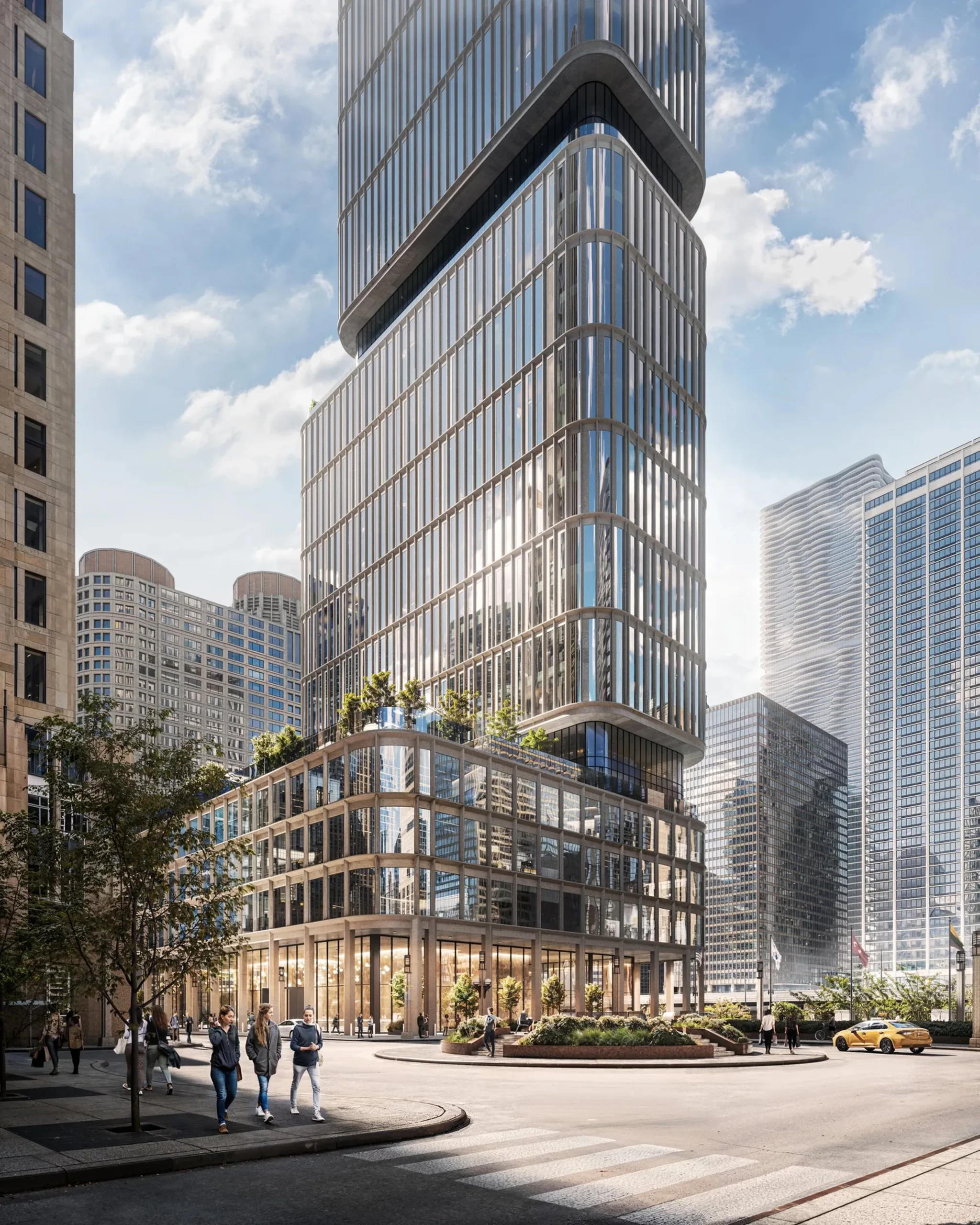
About the project:
Project type: a Method in-house project — a concept built to show the standard of our work and to test creative on a real campaign
Subject: premium residential tower, Chicago, Illinois, USA
Scope: CGI in three lighting variants · an ad campaign in two markets, paid for out of our own budget · cost per click and traffic quality measured
Test scale: 3 variants of one shot · 1 variable · 2 markets (Chicago, Los Angeles) · same audience, same budget, same format
A creative A/B test for a premium residential tower in Chicago
For years the visualisation industry has trained everyone to produce shots in one style, fixed in the brief up front, and then drop them into a marketing campaign. We were curious about doing it differently — about how to make the material live up to its potential and push sales results as far as they go.
Northline Tower is a project we made to show the level we work at, and to have something to test that hypothesis on for real rather than in theory. The test wasn't a simulation: we ran an actual campaign and measured actual numbers. We set up a situation where a developer is selling apartments in a premium tower in Chicago — a market where a buyer compares a dozen developments at once and first meets the offer as an ad on their phone. There's a budget, there's social media and there's a sales team. What there isn't is an answer to one question: which material actually sells.
The question sounds trivial until you work out what getting it wrong costs. Across a campaign running for several months, the gap in cost per click between two creatives is thousands of dollars and hundreds of lost contacts. And the decision that “this render is the nicer one” is usually made in the fifteenth minute of a meeting — on taste, not on data.
We started as a visualisation studio that wanted to check its own work rather than assume it. We ended up with a method we now use on every development: instead of one final render we hand over variants built for testing.
Where the answer disappears
The standard process goes like this. The architect hands over the model, the studio produces one final render per shot, marketing puts it into the campaign, and a month later someone asks why the results are poor. Nobody knows, because there's nothing to compare it with.
In a campaign you measure budget, audience, format and placement. Creative is the one variable nobody tests, even though it's what stops the scroll and decides whether any of the other settings get a chance to work at all.
The reason is mundane and has nothing to do with marketing acting in bad faith. There's nothing to test, because the order was for one render. A creative A/B test is lost at the brief stage, not at the campaign stage.
How we designed the test
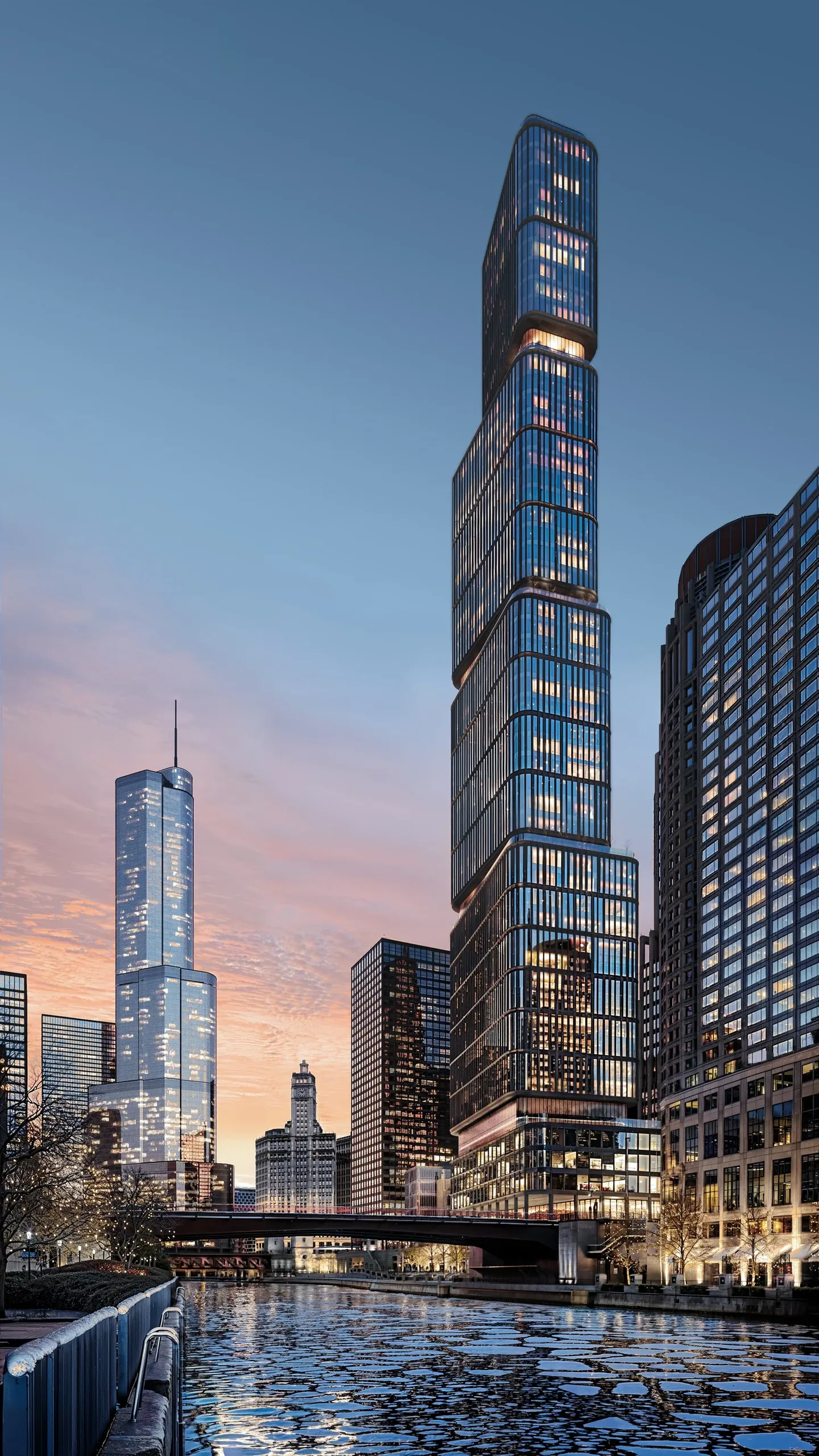
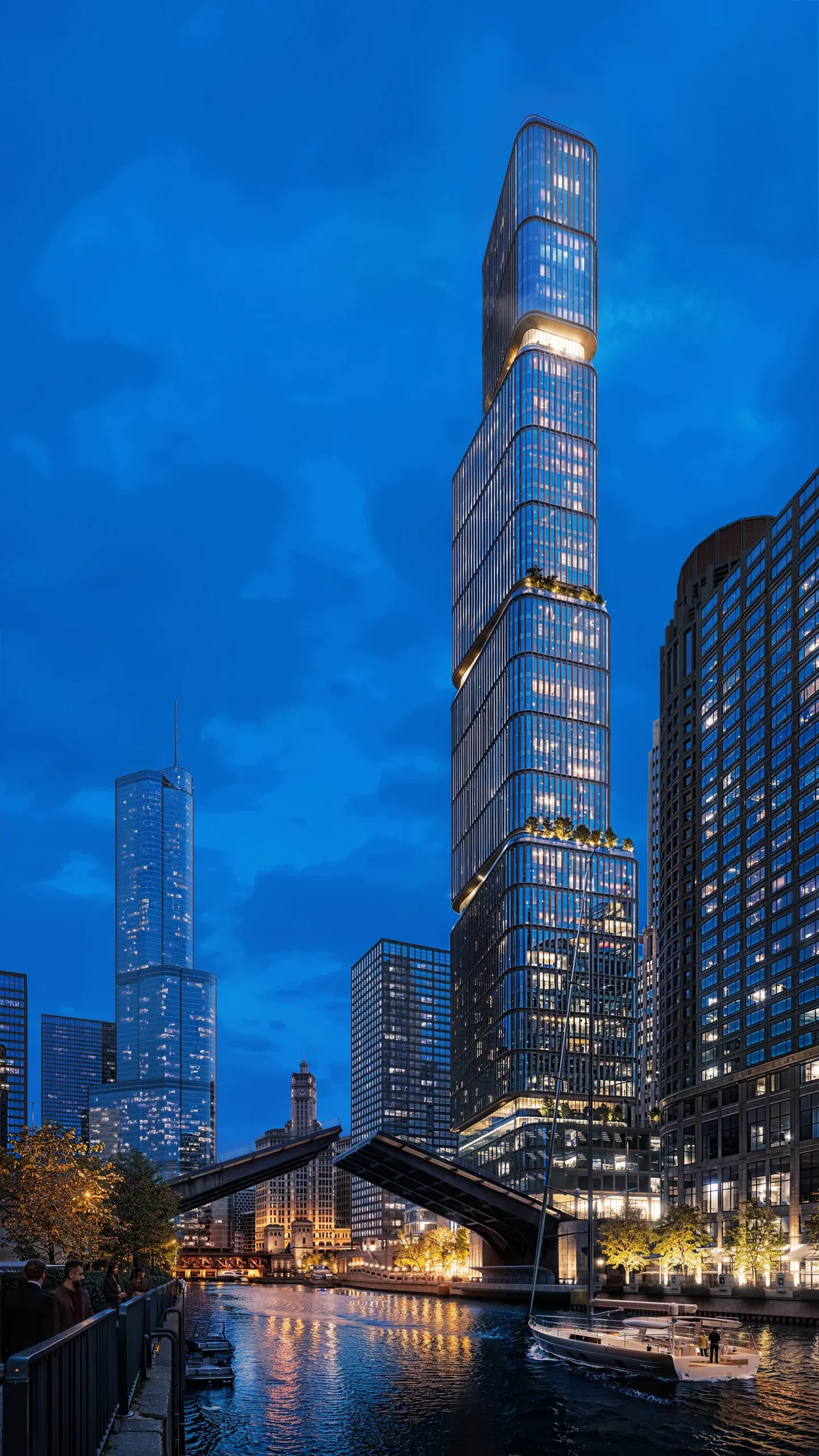
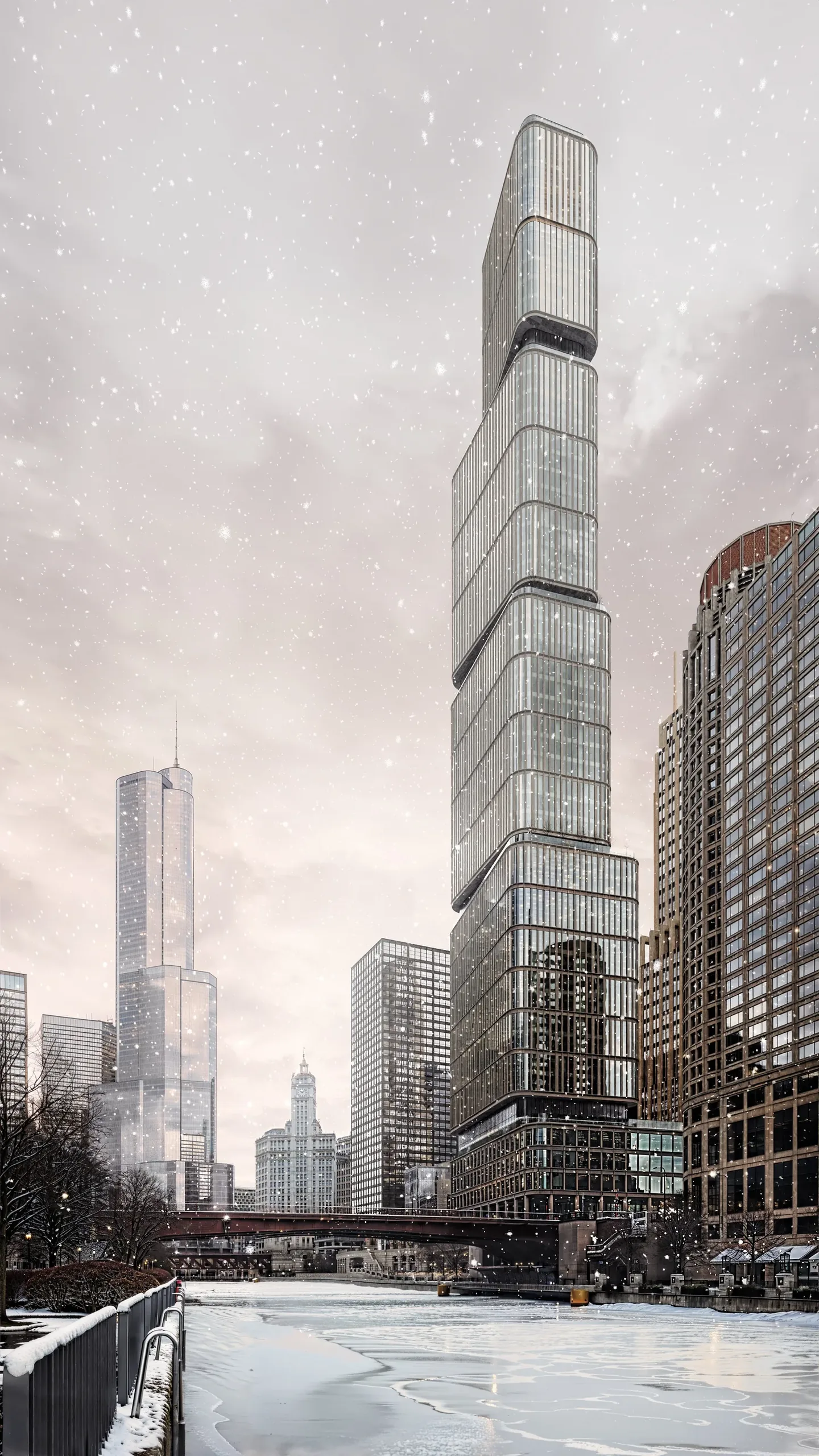
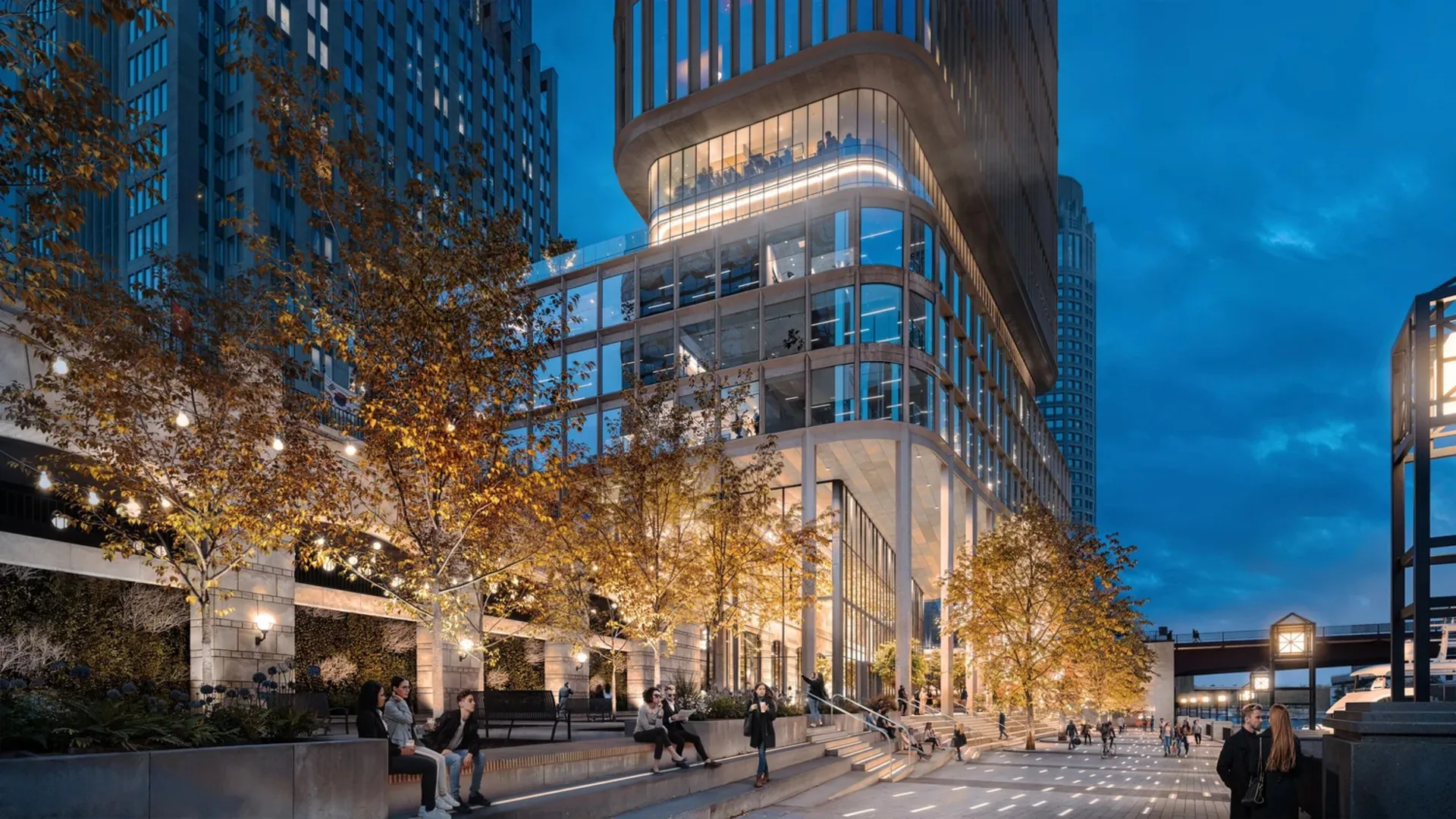
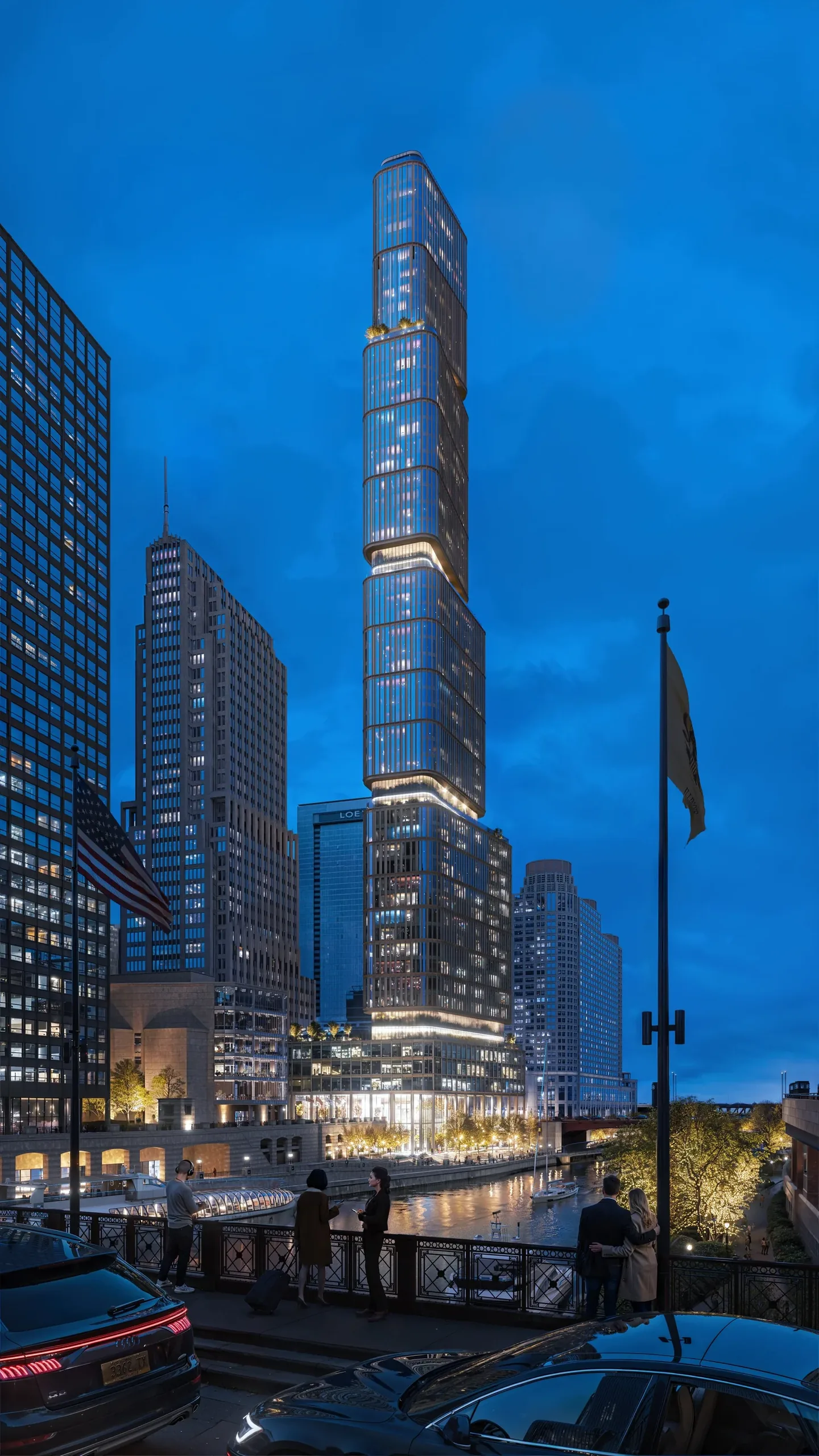
We proposed reversing the order. Instead of one “best” render we produced three variants of the same shot: day, night and winter. Same proportions, same framing, same composition, same building — the only difference being mood and light.
The whole difficulty of a test like this is keeping it clean. We stuck to three rules.
One variable. The variants differ only in time of day. If the framing or the presence of people had changed along the way, the result would still be interesting, but there would be no telling what had done the work.
Everything else identical. Same budget, same audience, same format. So everything we saw in the results came from the image, not from other settings.
Two markets at once. Chicago, where the development might be built, and Los Angeles, where part of the investor audience lives. One market gives you partial data; only the second shows whether the advantage repeats or is a local fluke.
It was a turning point in how we work today. A render stopped being a finished product and became a hypothesis to be tested, and a way to push sales results further.
What the results showed
The differences were bigger than we expected. The night variant won in both markets: in Chicago it delivered 20% more attention and traffic than the winter one, and in Los Angeles the gap reached 90%, almost double. It's worth saying that every test can come out differently and that a lot of factors feed into it. That is precisely why it pays to run them while you are selling.
Cost per click for the night variant was $0.31 in Chicago and $0.55 in Los Angeles — the gap between markets is natural, because media costs differ. The number that matters is a different one: the winter creative had a CPC 190% higher than the night one. Almost three times the price per click for the same building, the same budget and the same audience, with one difference — the time of day in the render.
That is what's at stake in a creative A/B test. The question isn't “which version is nicer”, it's “which version will you pay three times more for the same click”. The mood of an image isn't a matter of aesthetics, it's a line in your cost of sale — and it can be measured, provided you produce the material with a test in mind rather than a portfolio.
What this test did not prove
The night render “won” in this case, but that isn't a rule. On a development with a lot of greenery, with a water view, or with a different audience, the result can go the other way.
If we turned one project into the rule that “night sells better”, we'd be making exactly the same mistake as before — deciding up front, just with a nicer justification. The test didn't tell us the single formula for a render that sells best. What it gave us was a way of finding out in two weeks instead of guessing across a whole campaign cycle.
So we don't carry the Chicago result over to the next development. What we carry over is the method.
Creative A/B tests for your development
We plan the test variants during production, not after the campaign. It's a cost difference, not an ideological one: once the model, the framing and the composition exist, the second and third variants are a fraction of the work of the first — only lighting and post-production change. Adding a variant after the project has closed costs disproportionately more, and usually ends with nobody ordering it.
In practice: two or three variants of the key shot, differing in one thing at a time — time of day, season, or whether there are people in frame. Below two you have no comparison. Above three you spread the test budget so thin that the results settle nothing.
Then the test runs in the campaign, data comes in over two to four weeks, and you decide: what to scale, what to switch off, what to produce next. Creative stops being a matter of taste in a meeting and becomes a line you account for like the media budget.
So this isn't an idea we came up with to fill out an offer. We tested it on ourselves first, on our own project and our own ad budget, and only then wrote variants into our production standard and the test into how we run campaigns.
Beyond the renders we build the whole system
In the test we were checking the image alone, because that was the point. On a real development, though, the render is the way in, not the whole thing — around the winning variant we add the full set of materials that work at the later stages of the buyer's journey.
An interactive model for exploring the development — the buyer browses the building, the floor plans and the location from their phone, with geolocation and a map of the area. It's a tool for the agent in a meeting and for the buyer between meetings. Embedded in the development website it works around the clock and sells in the middle of the night.
Urban context map — in a premium development you aren't buying square metres, you're buying an address and a view. The map shows what's in the immediate area.
Digital brochure, website, sales materials and social content — one visual language across every medium, from the same sources, with no re-production for each new campaign.
The logic of putting it together this way is simple: the campaign brings the traffic, the model and the website hold it, the sales materials close it. If any one element speaks a different language, you lose attention at exactly the point where you paid for it. A creative test only makes sense if the winning variant has somewhere to lead.
Development animation
Want to find out which render of your development actually sells?
We produce variants built for testing, not one “final” render. Book a free walkthrough and we'll show you what a test like this looks like from the production side, the campaign side and the results side.
Technical details
Nine shots, one test render
The full set covered nine camera shots: complete views of the tower, the riverfront, and the ground floor and retail frontage from street level. For the test we picked one shot — the one that was the first contact with the development in the campaign. The rest were produced in a single lighting version, because testing every frame at once splits the budget and settles nothing.
Three variants of the same frame
Dusk, night and winter variants rendered from the same model and the same camera position. We changed only lighting, weather and post-production — geometry, framing and composition stayed identical. It's the only way the difference in results can be put down to mood rather than to some incidental change in the image.
Frames built for ad placements
We produced the test shot in portrait for mobile formats; the others were made in 4:5 and in panorama for desktop and landscape material. All three variants at the same resolution and the same crop, so the algorithm wouldn't favour any of them when fitting an ad slot. This isn't a fixed rule — we match the frames to wherever the campaign will actually run.
Campaign test settings
Three variants as separate creatives in one campaign, on the same budget, the same audience and the same format. Two markets in parallel: Chicago and Los Angeles. What we measured: cost per click and traffic quality. The decision on what to scale comes from the result, not from the team's preference.
What we add on a real development
Outside the scope of this test, but within the same visual system: an interactive model with floor plans, geolocation and a map of the area, an urban context map, a digital brochure, a website, plus sales materials and social content. All of it comes from the same sources as the renders, so derivative frames and formats need no re-production.
-
You run variants of the same shot as separate creatives with everything else identical — same budget, same audience, same format. You collect data for two to four weeks and compare cost per click and traffic quality. There's one condition: the variants may differ in one thing only. Change the framing or the message along the way and the result settles nothing.
-
Usually two or three for the key shot. Below two you have no comparison; above three you spread the test budget so thin that no variant gathers enough data. Variants should differ in one thing at a time — time of day, season, or whether there are people in frame.
-
Yes, and heavily. In our test the same building in the winter variant had a cost per click 190% higher than in the night variant — on an identical budget, audience and format. Creative is a variable you can measure exactly as you measure the media budget.
-
Yes. The campaign was paid and ran in two markets — the budget was simply ours rather than a client's. Northline Tower is a Method in-house project: we built it to show the level we work at and to have something to test hypotheses on before we start selling them. The renders, the ad spend and the numbers are real; there's just no developer on the other side. We think that's how it should be: you test your own methods at your own expense.
-
At the production stage, together with the first render. Once the model, the framing and the composition exist, the second and third variants are a fraction of the work of the first — only lighting and post-production change. Adding a variant after the project has closed costs disproportionately more, so in practice nobody orders it and the campaign ends up with nothing to test.
-
Day shows the architecture and the materials; night sells mood and status. In our test night won in both markets, but that isn't a rule — on a development with a lot of greenery or a water view the result can go the other way. Which is why you test rather than assume.
-
Yes, the mechanics are identical — only media costs differ. Polish CPC is lower than American, so the absolute saving is smaller, but the percentage gap between a good and a poor creative stays the same.
-
Because several weeks usually pass between first contact and a decision, and in that time the buyer isn't talking to an agent. The model keeps them in touch with the offer: floor plans, location and the context of the area, on their phone, at any hour. It's also a presentation tool in a meeting, and the place the winning campaign creative leads to.
-
A set of materials and tools that give the sales team something to work with at every stage of the conversation: renders for the campaign, a model and website for the buyer to explore alone, a brochure to send after a meeting, floor plans and a context map for closing. It's about continuity, not the number of files.
-
Google Maps shows everything; a context map shows what sells. It's selection and hierarchy — the transport links, amenities and landmarks that matter to this particular group of buyers, in your visual language.
-
Yes. We ran full development marketing for a project in Auckland, New Zealand, and the test described here ran in the United States. Production and campaign management work remotely — what it takes is one system of materials and a regular rhythm of decisions.
-
The quote depends on the number of shots, variants and tools. You start either on a Creative Hub subscription (production credits) or with a Blueprint — a paid diagnosis after which you know exactly what you need. We give the range on a free walkthrough.
