2026-08-03 · Case studies · Local Investments
Local Investments: brand, materials and a sales system for four developments
Details
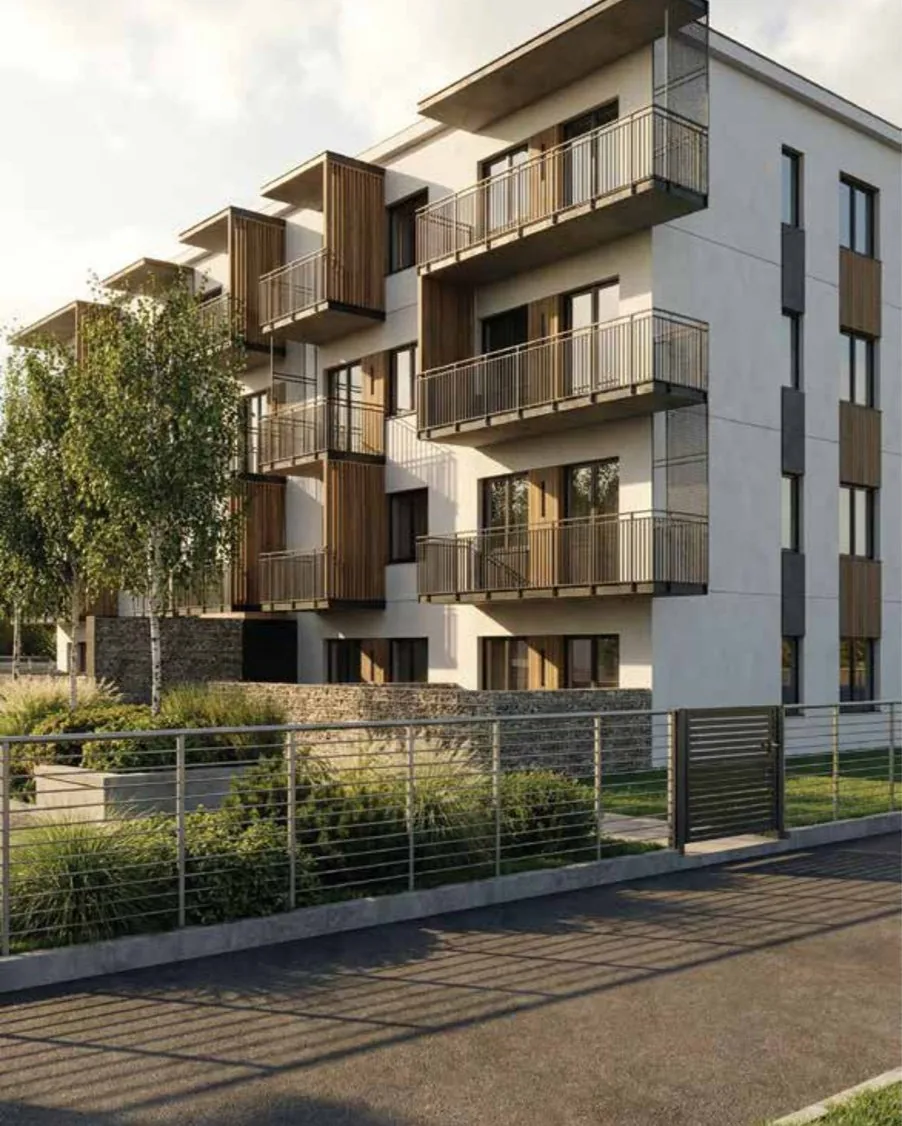
End-to-end work for a developer: brand strategy, CGI, animation, 360° tours, a 3D model, development websites and a sales system for more than 65 units.

Local Investments builds on the Masurian lakes — Przystań Borowe, ROOS Lakeside Living, Dom w Piduniu and Nowy Pasym. We took this on from nothing: from the question of what the brand actually is, through a complete set of sales materials, to the system the sales team works in today.
We started by asking what this brand is
Four developments under one banner force an answer before the first piece of material exists: is the buyer choosing Local Investments, or choosing Przystań Borowe? An umbrella brand either carries trust over to the next project or dilutes the character of each one. There is no third option.
We built a brand strategy on the Golden Circle and on archetypes — from “why” to “what”, with a tone of voice written down so it doesn't depend on who happens to be writing the post that day. Out of that came a full identity, then the printed “Visual Strategy Edition 2025” and a system of social materials.
The order wasn't an aesthetic choice, it was a cost one. Had the website come first, every later decision — which colour, which headline, which photo — would have been argued from scratch. With a brandbook, most of them are settled once.
Exterior renders
On waterside developments you aren't selling floor area. You're selling a morning on the jetty and the view from the kitchen window. So we made the renders not as a catalogue of buildings but as scenes from everyday life — with times of day, weather and people in frame. The same house shown at dusk and at midday sells two different things.
The same language holds across the whole portfolio. Przystań Borowe is lakeside houses; ROOS Lakeside Living and Nowy Pasym are a different scale and a different architecture — but the materials read as one brand, not three separate companies.
Interior renders
Interiors show what a floor plan can't: how the light falls, what you see from the bed and how much room is left once the table is in. In holiday homes the same goes for the shared areas — sauna, wellness and gym, which sell as hard as square metres do.
Development catalogue and apartment sheets
The renders and the website answer the buyer's first question: what will it look like. The second question is harder — what exactly am I buying and for how many square metres. That is answered by the materials an agent sends after the first conversation.
For Nowy Pasym we put together a full development catalogue: description, key selling points, location with distances, a listing of all 32 apartments, floor plans for every storey and a separate page for each apartment. Scroll to leaf through it.

Apartment sheet
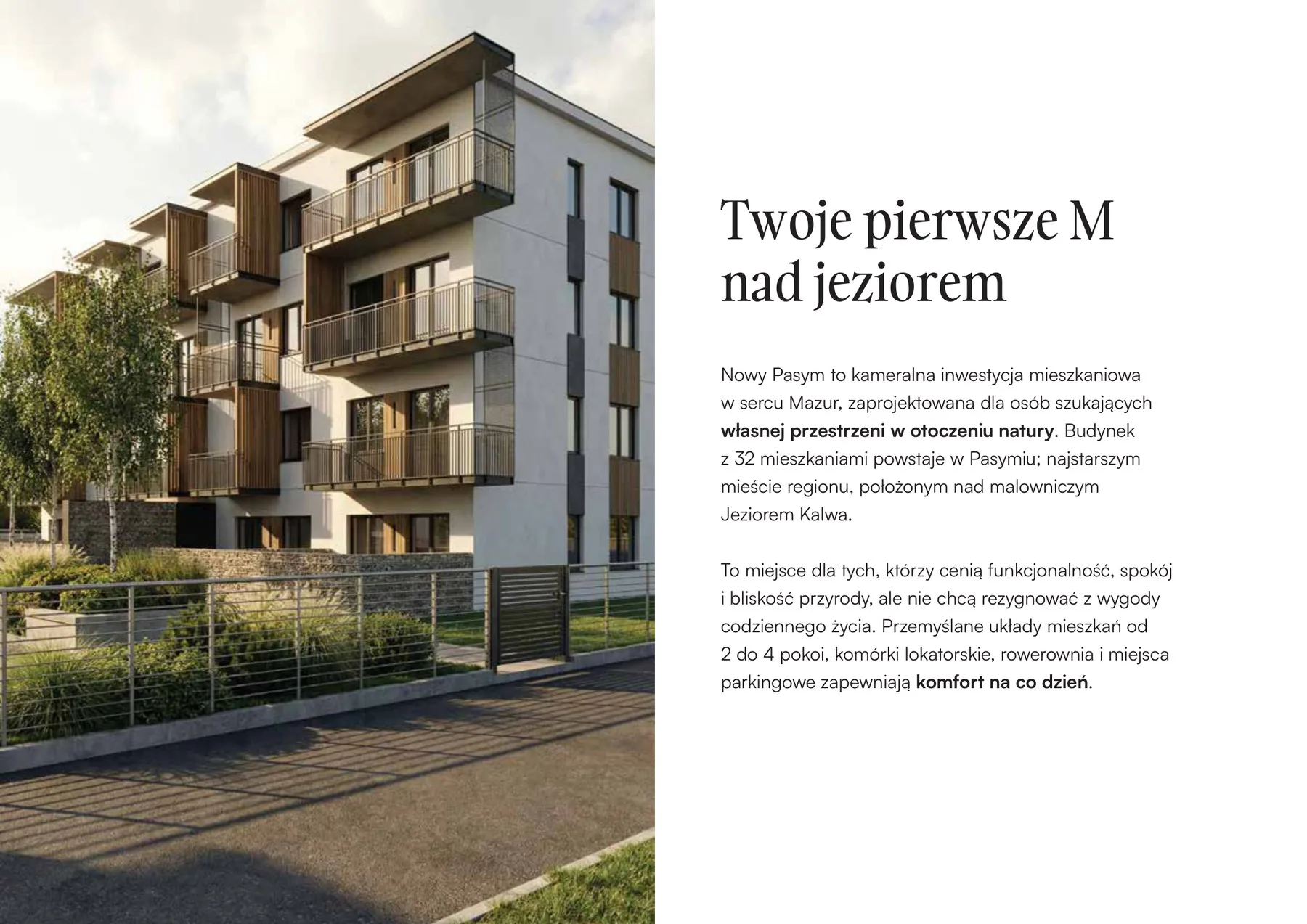
1_M7
58.8 m² · 1st floor · 2 rooms
The 3D plan shows the apartment furnished: a living room with a kitchenette opening onto the balcony, two bedrooms, a dressing room and a bathroom. The buyer doesn't have to imagine whether the bed and table fit — they can see it.
- 1.7.3 kitchenette + living room
- 18.4 m²
- 1.7.5 bedroom 2
- 10.8 m²
- 1.7.4 bedroom 1
- 9.7 m²
- 1.7.1 hallway
- 8.9 m²
- 1.7.2 dressing room
- 6.5 m²
- 1.7.6 bathroom
- 4.5 m²
- 1.7.B balcony
- 10.2 m²
Every one of the 32 apartments has a sheet like this: a room schedule, a technical plan and a furnished 3D render.
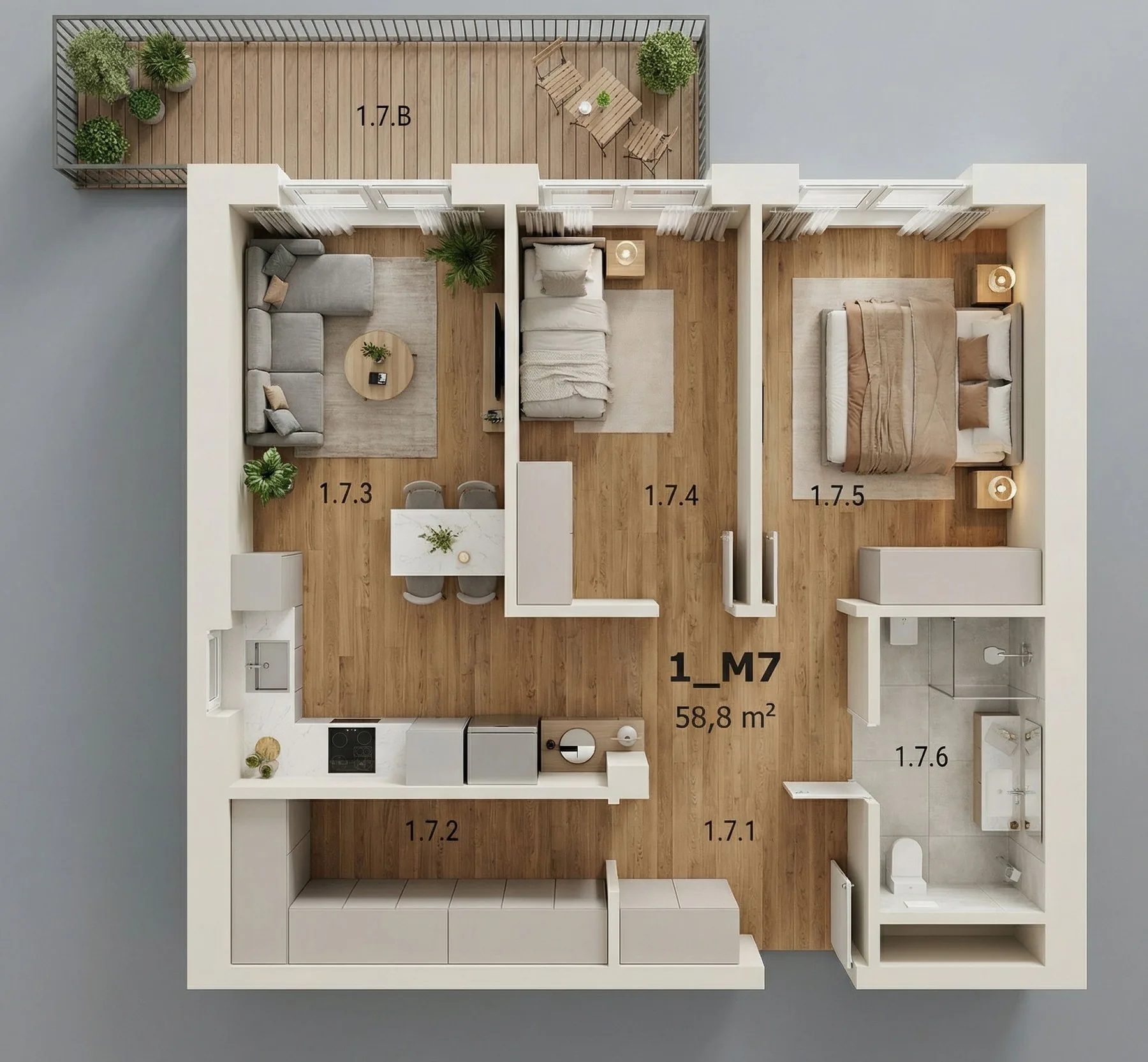
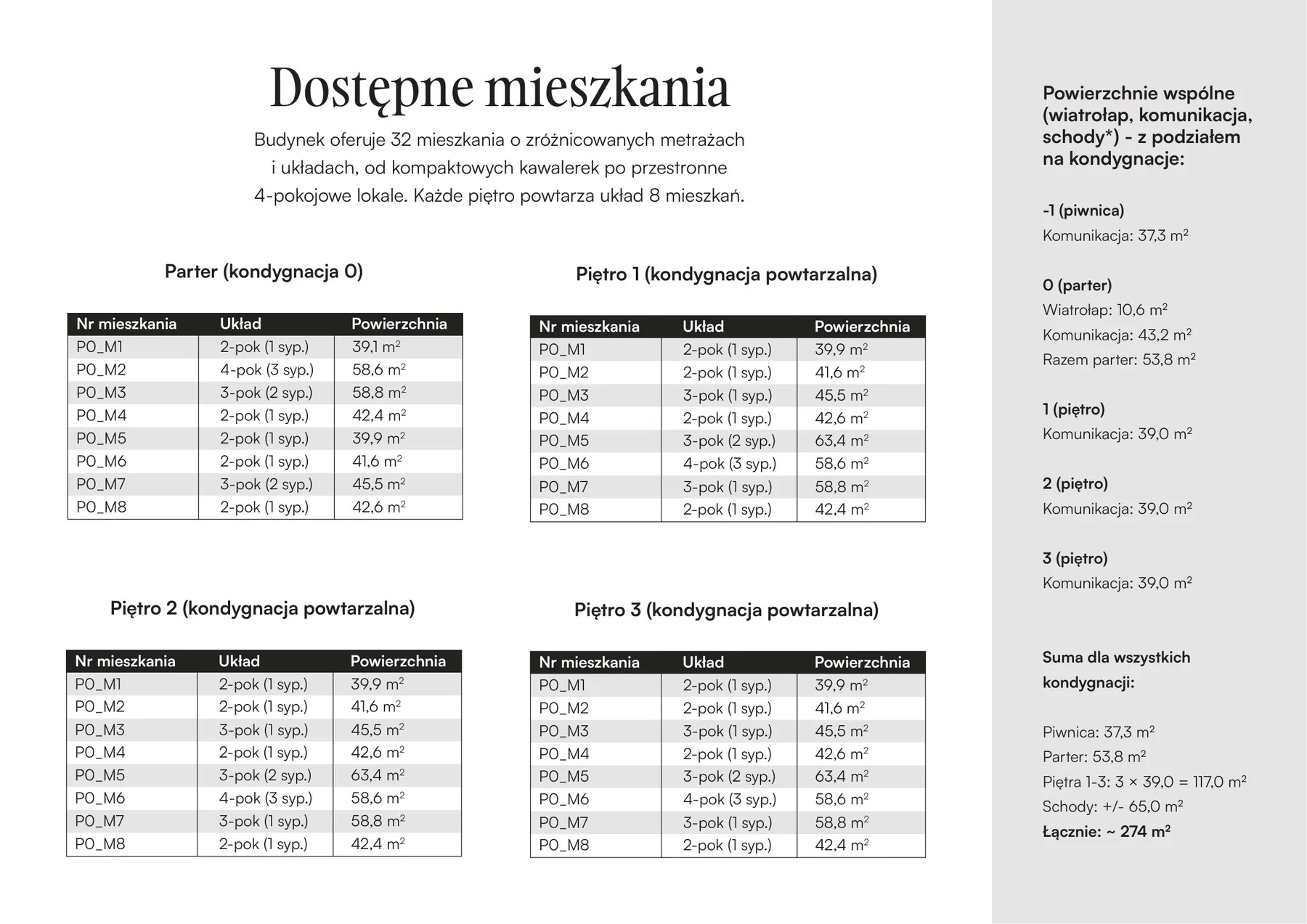
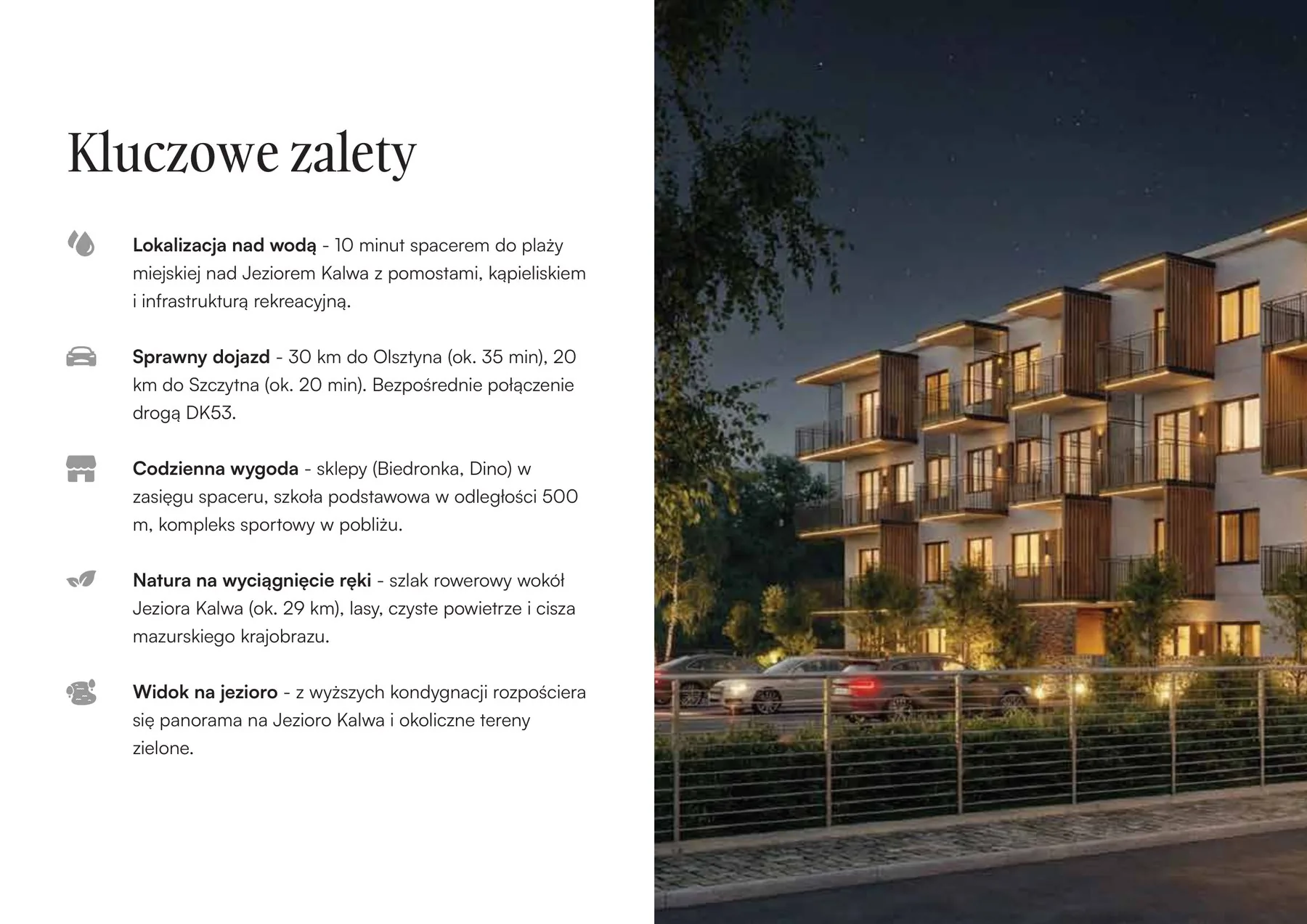
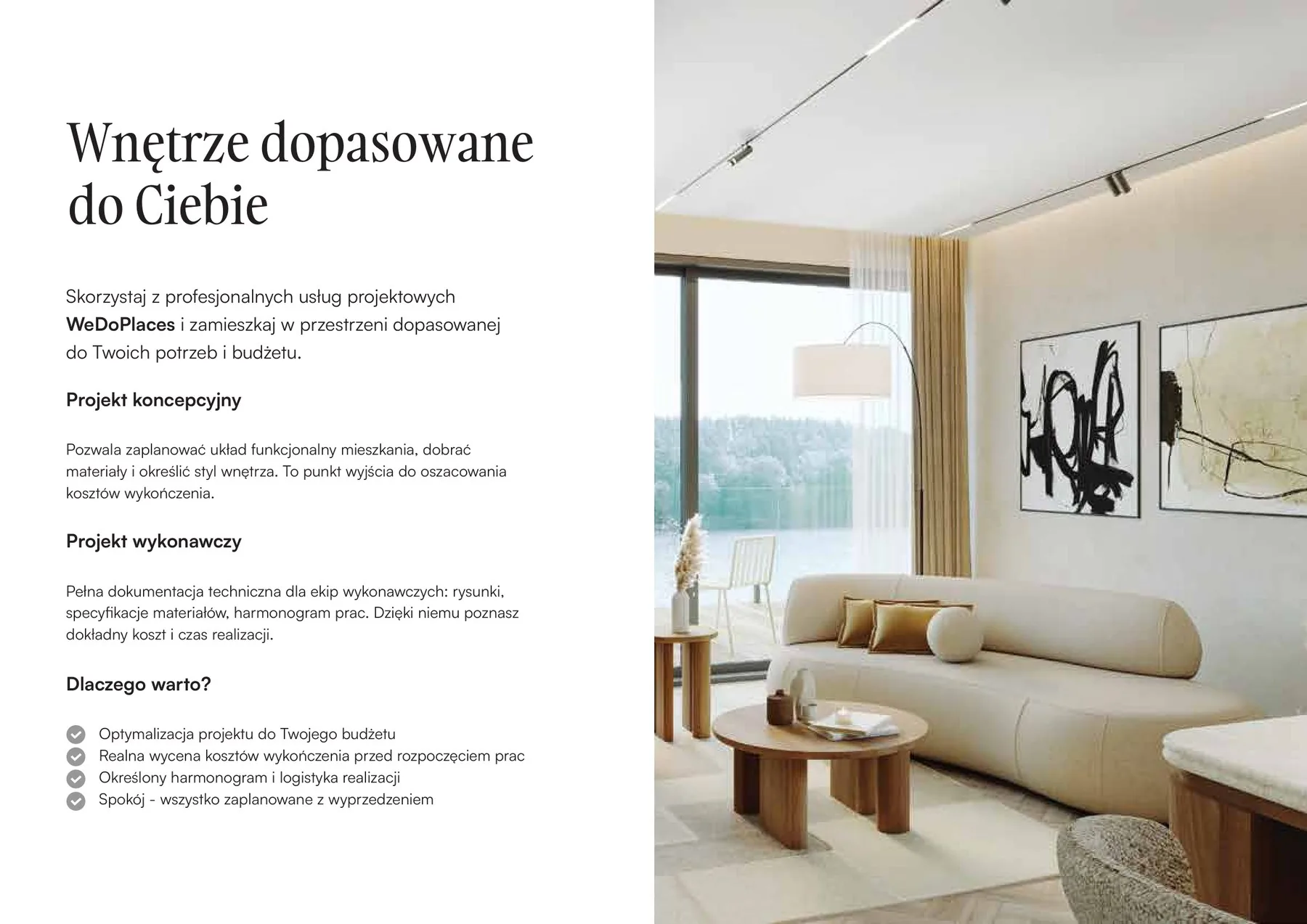
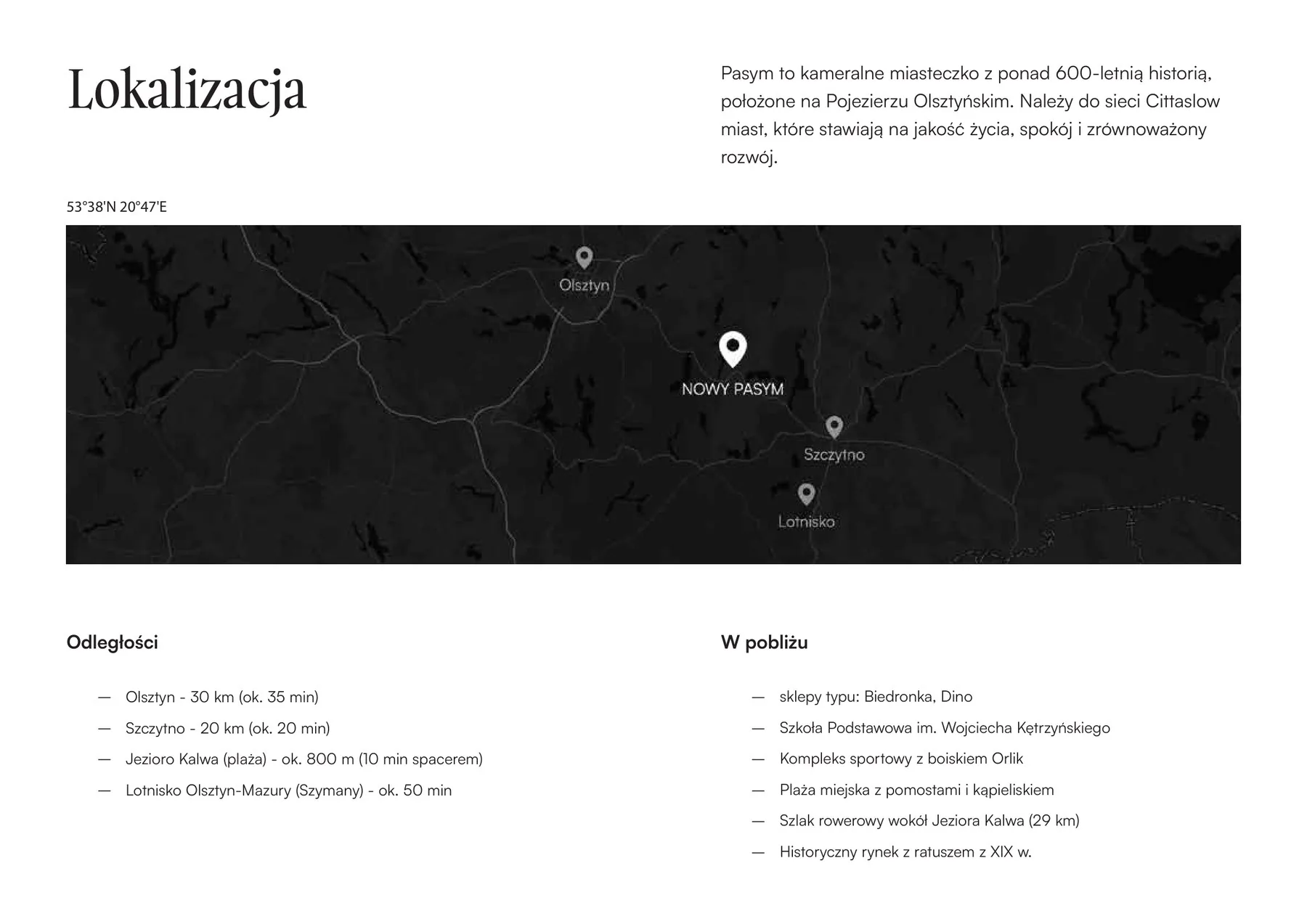
The catalogue isn't a glossy brochure. Most of its pages are specifics: area tables, floor plans with rooms labelled, distances in kilometres and minutes. This is the sort of thing a buyer forwards to their family — and that is the moment a development works without an agent.
We also produce the apartment sheets as 3D plans — with furniture, light and true proportions. A flat technical drawing is read by an architect. A buyer reads a picture that shows the bed, the wardrobe and the table really do fit.
Animation
Animation does what no single frame can: it conveys scale and surroundings. The buyer sees how far the water is, what stands next door and how the development sits in the landscape. The material works in the campaign, on the website and in a meeting.
From the same photographs we cut short formats for social media and campaigns — they go live immediately, with nothing to click through.
Interactive 3D model
Someone buying a house by a lake rarely decides in one visit. Several weeks pass between first contact and signing, and in that time nobody is talking to them — which is the moment when a development either works on its own or slips out of mind.
The model is the answer: the buyer rotates the site, zooms in, picks a house and checks where it sits in relation to the water. Below is the same model that runs on the development website — turn it and see for yourself.
360° virtual tours
A virtual tour takes the “what does it really look like” questions off the agent. The buyer steps inside at any hour, with no site visit to arrange, and moves between areas exactly as they would in person.
See how it works — the tour below is fully interactive. Click into the frame, look around and move to the next room. That is exactly what a buyer does on the development website.
Development photography
Renders sell what doesn't exist yet. Once the development is built we add a photo shoot of the finished houses and interiors — because at that point buyers start asking whether reality will match the render.
We shoot for the same media as the renders and in the same visual language, so the material doesn't drift apart between stages of a development. One shoot serves the website, the campaign, the property portals and the agents' materials — with no separate production for each channel.
Development websites as the single home of the offer
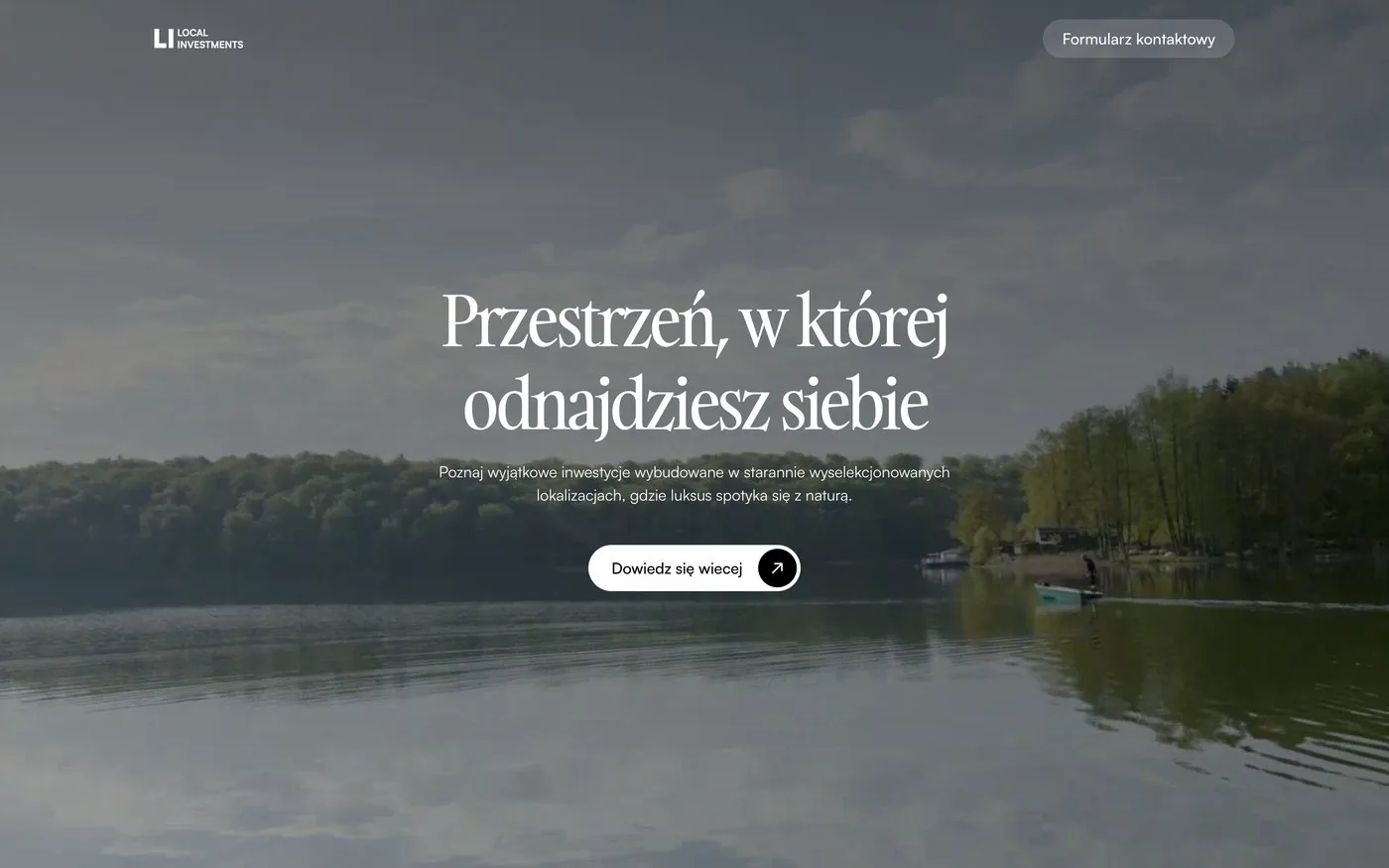
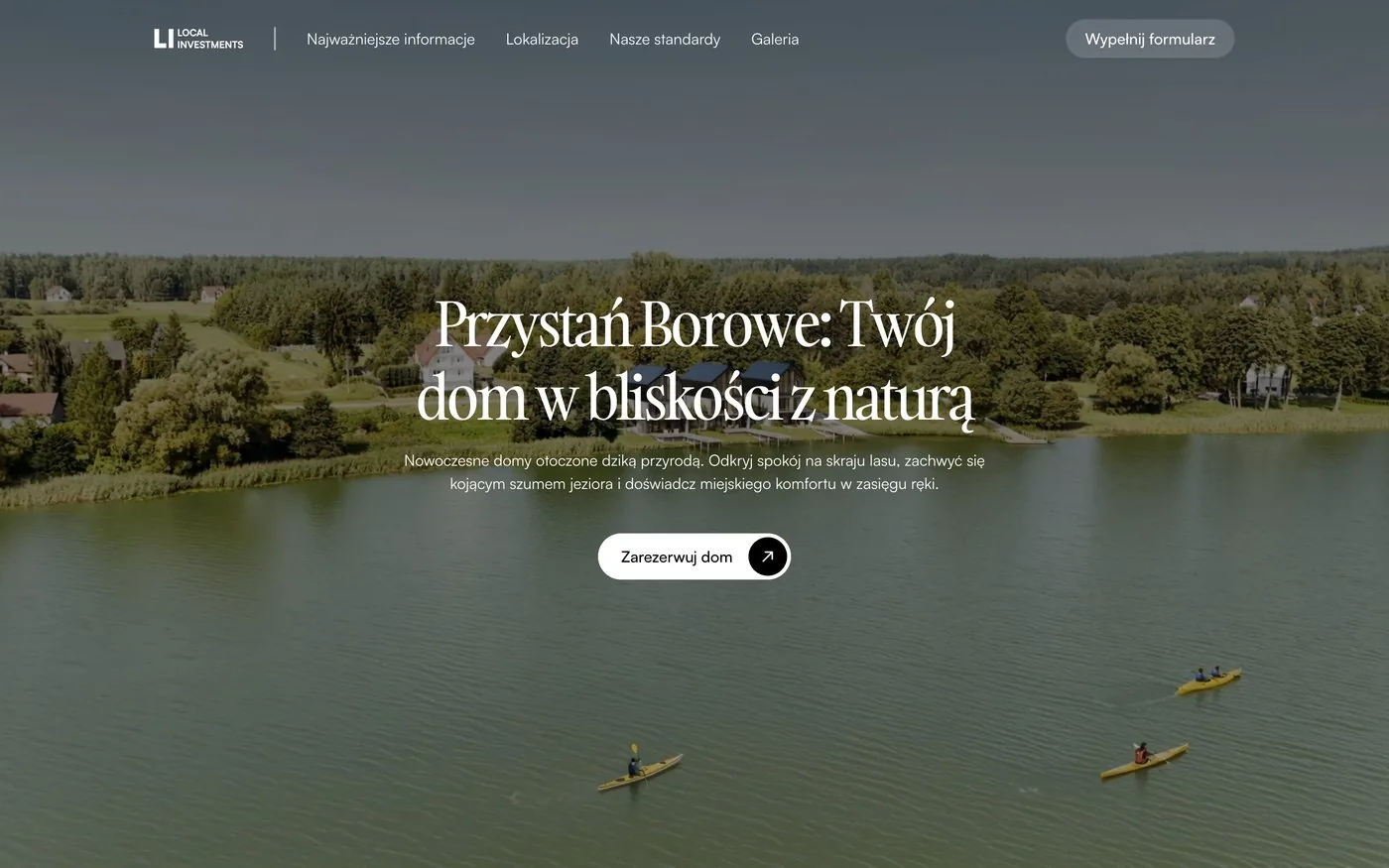
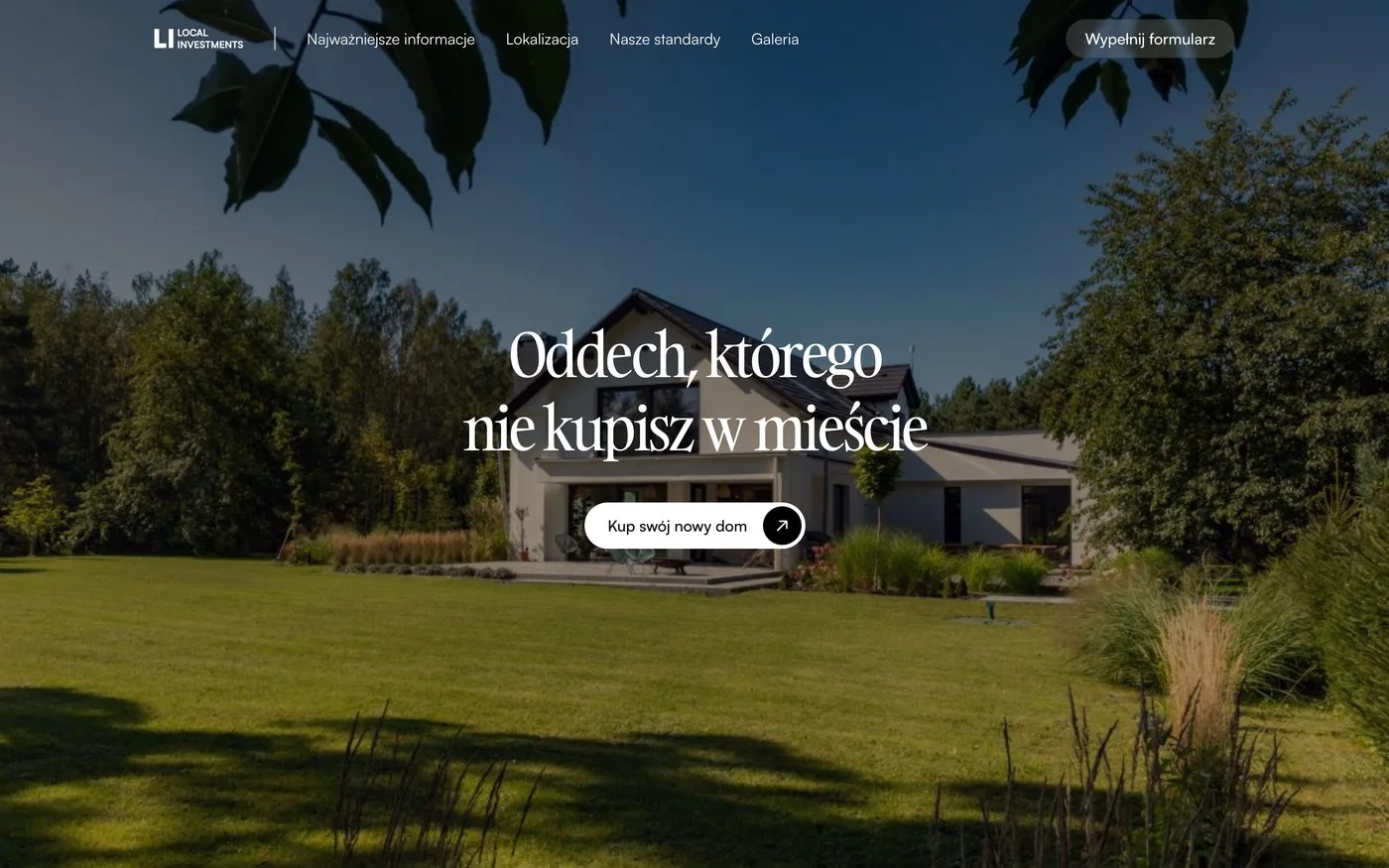
Each development got its own website within a shared visual system, with the model, the tours and a form wired straight into the sales system. The site isn't a business card — it's where a buyer checks availability, prices and floor areas for themselves.
Materials aren't the end, they're the way in
The moment the websites were finished, a problem surfaced that no render solves: somebody has to keep all of it running.
Changing the price of a house meant going into several sites and editing by hand. A new lead landed in an inbox and competed for attention with invoices. The price history required by Polish development law was another file to maintain. Four developments times those three chores is dozens of small, repetitive tasks a month — every one of them easy to miss, and none of them visible until a lead disappears.
This is the point where most creative projects end and the client's problem stays put.
Sales system:
one place for units, prices and leads
We moved more than 65 units out of Excel into a single database — with price, status and specifications. Everything else reads from it: the listings widget on the sites updates itself, a form goes into the CRM assigned to the right development with an email matched to it, and price history is recorded automatically on every change.
If you want to see exactly how we built it, we've recorded a walkthrough — step by step, on the live panel: see how the developer panel works.
This is the panel the sales team works in: the state of the offer, missing materials, agents' requests and blocking decisions in one view.
The last figure is the instructive one. Three replies in a week doesn't sound spectacular until you realise what it means: three sales conversations that already existed and that nobody had gone back to. The system didn't create new demand. It recovered demand that was being wasted.
Why this is one project, not two
You could describe it as two jobs: a creative one and a systems one. We treat it as one, because that is how it works at the client's end.
The brandbook decides how the listings widget looks. The renders are what a buyer sees on the page the campaign leads to. The 3D model is the tool of the agent who gets the lead out of the CRM. The price history sits on the same page as a render that cost tens of thousands.
A developer doesn't buy “materials” and “automation” separately. They buy one thing: marketing and sales that run without constant supervision. That this takes two different skill sets is our problem, not theirs.
We'll run your development the same way
The starting point is usually the same: the data exists, it's just scattered. A spreadsheet of units, prices typed into websites by hand, leads in an inbox, price history as a separate file kept up late. The materials exist too — in several versions, in several places.
We start with the brand if there isn't one, and with a single decision if there is: which field is the source of truth for price and status. The rest is technical work — the database takes over from the spreadsheet, the sites read from the database, forms land in the CRM, price history records itself.
With complete data we're talking days, not months.
Yes, and it's how we prefer to work. At Local Investments we started with brand strategy and a brandbook, then identity, print and social materials, exterior and interior CGI, animation, 360° tours and the 3D model, and on to the development websites and the sales system. One team is responsible for all of it, so nothing gets lost in the gaps between suppliers.
With the brand, if there isn't one. With several developments under one banner you first have to settle what the buyer is actually choosing and what language you speak. Without that, every subsequent piece of material is a separate argument — and those arguments cost more than a brandbook does.
Yes, once it's built. A photo shoot closes what the renders were selling — buyers stop asking whether reality will match. We shoot in the same visual language as the renders and for the same media, so the material doesn't drift apart between stages.
Yes. For Nowy Pasym we produced a full catalogue: a description of the development, key selling points, location with distances, a listing of all 32 apartments, floor plans for each storey and a separate page for every apartment. We also produce the apartment sheets as furnished 3D plans, because a buyer reads a picture faster than a technical drawing. The material works both as a PDF in an email and in print at a meeting.
If the data is complete, it's a day's work. We take the spreadsheet as it is, map the columns onto the database structure and switch it on. The stage that actually takes time isn't the migration — it's deciding which field is the source of truth for price and status.
Yes. The widget reads from the database on every page load, so the price on the site always matches the price in the system. There's no manual editing and no gap between the listing and reality.
An entry is created automatically on every price change in the database and published on the development site. The legal obligation stops being somebody's calendar task — it happens as a side effect of ordinary work.
It goes straight into the CRM, gets assigned to a specific development and receives an automatic email matched to that development rather than a generic one. From that moment it has an owner and a deadline. Which is why the number of lost leads is zero, not “almost zero”.
Because several weeks pass between first contact and a decision, and in that time the buyer isn't talking to an agent. The model and the tours let them explore the development on their own, at any hour, and give the agent a tool for meetings. The same material works in two places.
A render is a picture; a model is a tool. The buyer rotates the site, picks a house and checks where it stands, how big it is and what it costs. The data in the model comes from the same database as the listings widget, so there's nothing to update separately.
Usually it is — and that is precisely why it doesn't work. Materials without a system have to be handled by hand, and a system without materials has nothing to show. We do both, because the client buys the outcome, not a division of skills.
Yes. The most common way in is Method Creative Hub, a subscription for producing materials — we do as much as fits the monthly allowance. You can also start project by project, with one thing: a catalogue, a set of renders or a development website. The system comes later, on top of finished materials.
Yes. Local Investments builds by the water and in smaller towns: Borowe, Pasym, Piduń. Scale and location don't change the mechanics — the same need for one home for the data, and the same statutory obligations.